Finance impact crushers for aggregate, quarry, recycling, and soft-rock applications. Horizontal shaft and vertical shaft impactors. Quotes in 24 hours.
Gradation shape is where impact crushing earns its place in the circuit. An HSI or VSI producing cubical, well-shaped aggregate particles from limestone or dolomite delivers material that compacts more predictably, bonds more effectively in asphalt and concrete, and meets highway specification gradation requirements that jaw-and-cone circuits sometimes struggle to hit without additional shaping passes. The product shape justifies the machine's place in the circuit even when its throughput is lower than a comparable cone.
We finance horizontal shaft impactors (HSI), vertical shaft impactors (VSI), and complete portable impact crushing plants for aggregate quarries, recycling operations, soft-rock mining, and industrial mineral processing. The market covers a wide range from compact 100-tonne-per-hour portable plants working demolition concrete and asphalt recycling contracts to large stationary HSI installations processing 600 or more tonnes per hour of virgin limestone in a major aggregate quarry.
Our minimum is $50,000. Impact crusher transactions typically fall between $80,000 for a small used VSI and $1.5 million or more for a new large HSI plant with screens and conveyors. Application-only processing is available up to approximately $400,000; larger transactions move through our documentation process and still close faster than conventional bank equipment lending.
HSI vs. VSI: The Two Impact Crusher Types
Horizontal shaft impactors throw feed material against breaker bars mounted on a spinning rotor, generating impact energy on the horizontal axis. The rotor speed, the apron gap settings, and the number of rotor bars determine the product gradation. HSIs are most effective in soft to medium hardness materials: limestone, dolomite, chalk, gypsum, coal, and recycled concrete. They generate significant fines in hard abrasive rock, which drives up wear costs and degrades product gradation, making them a poor choice for granite or high-silica formations wherecone crushingdominates.
Vertical shaft impactors accelerate feed material centrifugally outward from a high-speed rotor, either throwing it against a rock shelf (rock-on-rock mode) or against wear-resistant anvils (rock-on-steel). VSIs produce exceptionally cubic product and are used primarily as shaping and sand production machines, often in the final crushing stage of an aggregate circuit where product shape and gradation consistency are the controlling specification. Sand production in a VSI circuit is a well-established production method in markets where naturalsand and gravel supplyis constrained.
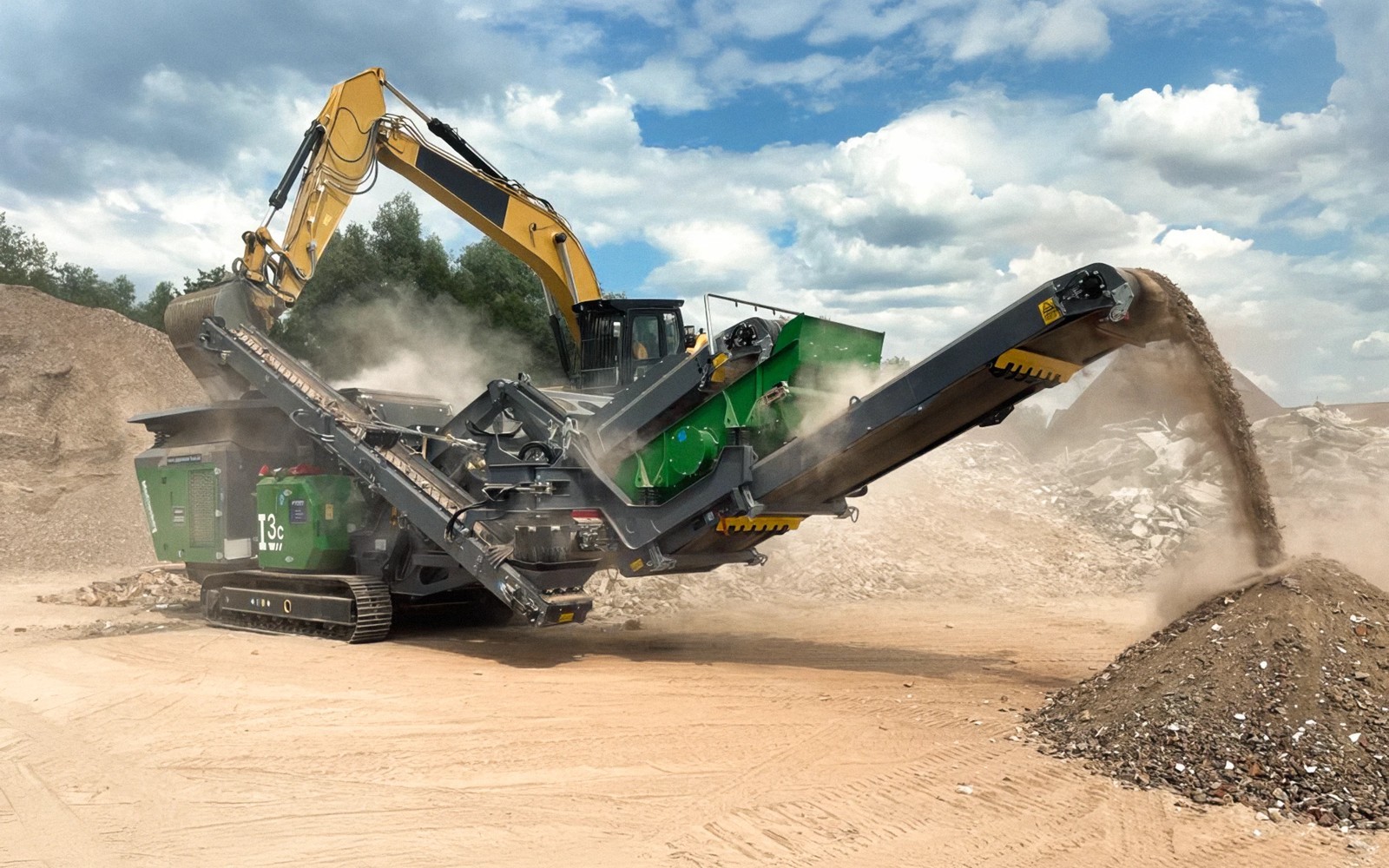
Portable impact crushing plants, combining an HSI crusher with a double-deck screen and integral product and recirculation conveyors on a track-mounted or wheeled frame, are widely used in the recycling and portable aggregate market. The Metso Lokotrack LT1213S, the Sandvik QI442, and Powerscreen's Premiertrak and Trakpactor lines are prominent in this category. Track-mounted portability and rapid deployment between job sites are the key value propositions, and both of those translate directly into residual value that supports financing.
Who Finances Impact Crushers
Limestone quarry operators represent the natural buyer base for large stationary HSI installations. An operation producing specification aggregate for highway base and asphalt hot mix needs the product shape that an HSI circuit delivers in limestone, and the capital commitment on a complete HSI primary or secondary installation is substantial. These are long-life circuit components whose financing term can reasonably extend to 72 or 84 months against the quarry's multi-decade reserve life.
Recycling contractors who process demolition concrete, asphalt millings, and mixed construction and demolition waste rely on portable HSI plants. The impact crusher accepts reinforced concrete rebar contamination better than a jaw crusher when the machine is equipped with a rebar extraction system, and the impacting action helps liberate aggregate from the cement matrix. A portable crushing and recycling contractor with active contracts processes material that generates immediate revenue, which makes the financing case straightforward.
Aggregate quarries in growth markets, particularly those serving highway construction programs in the Southeast, Mountain West, or Texas, have seen consistent demand for additional crushing capacity. An operation in a state with active infrastructure spending that can add a secondary impact circuit to increase finished aggregate output without expanding the primary crushing circuit is solving a revenue problem with a capital solution. We finance that solution and have done so consistently for quarry operators in the key U.S. aggregate markets.
Financing Terms and Structures
Impact crusher financing terms typically run 48 to 84 months. Portable track-mounted plants often use shorter terms, 48 to 60 months, that match the expected contract cycle and preserve the option to upgrade when the next generation of portable plant offers meaningful productivity improvement. Stationary circuit components favor longer terms that reflect the permanence of the installation and the quarry reserve life supporting the operation.
Lease structures are common for portable impact plants, particularly among contractors who rotate equipment with technology cycles. An operating lease on a portable impact plant can be structured so that the machine returns to the lender at the end of the lease term rather than carrying residual depreciation risk on iron that technology has started to pass. For buyers who plan to run the machine indefinitely and absorb the full depreciation, a loan with dollar-buyout is a better fit.
We also handleSale-Leaseback Financingon impact crushers that are owned free and clear. A quarry operator who bought a portable impact plant outright and now wants to redeploy that capital into a fleet expansion or processing upgrade can sell the machine to us, receive the current market value in cash, and continue using the plant on a lease. The plant keeps running; the capital moves.
What Else to Finance With Your Impact Crusher
Impact crusher circuits depend on what comes before and after the machine. A primaryjaw crusherprebreaks material to the HSI's acceptable feed size. Screens downstream classify the impact crusher's output and route oversize to the recirculation path. A complete circuit upgrade often includes all three, and financing the complete package through one transaction simplifies documentation and can deliver better overall terms than three separate equipment loans.
For operations that also run cone crushers in a parallel or series circuit with the impact crusher, ourcone crusher financingpage covers that asset in detail. Buyers who are combining cone and impact capacity in an aggregate processing facility often bring both to us in the same transaction.
Portable crushing contractors who want to expand their fleet by adding a second impact plant alongside their primary unit can often use the equity in the existing machine to reduce the down payment requirement on the second. Ourapplication-only financingprogram covers single-plant additions in the sub-$400,000 range without requiring financial statements.