
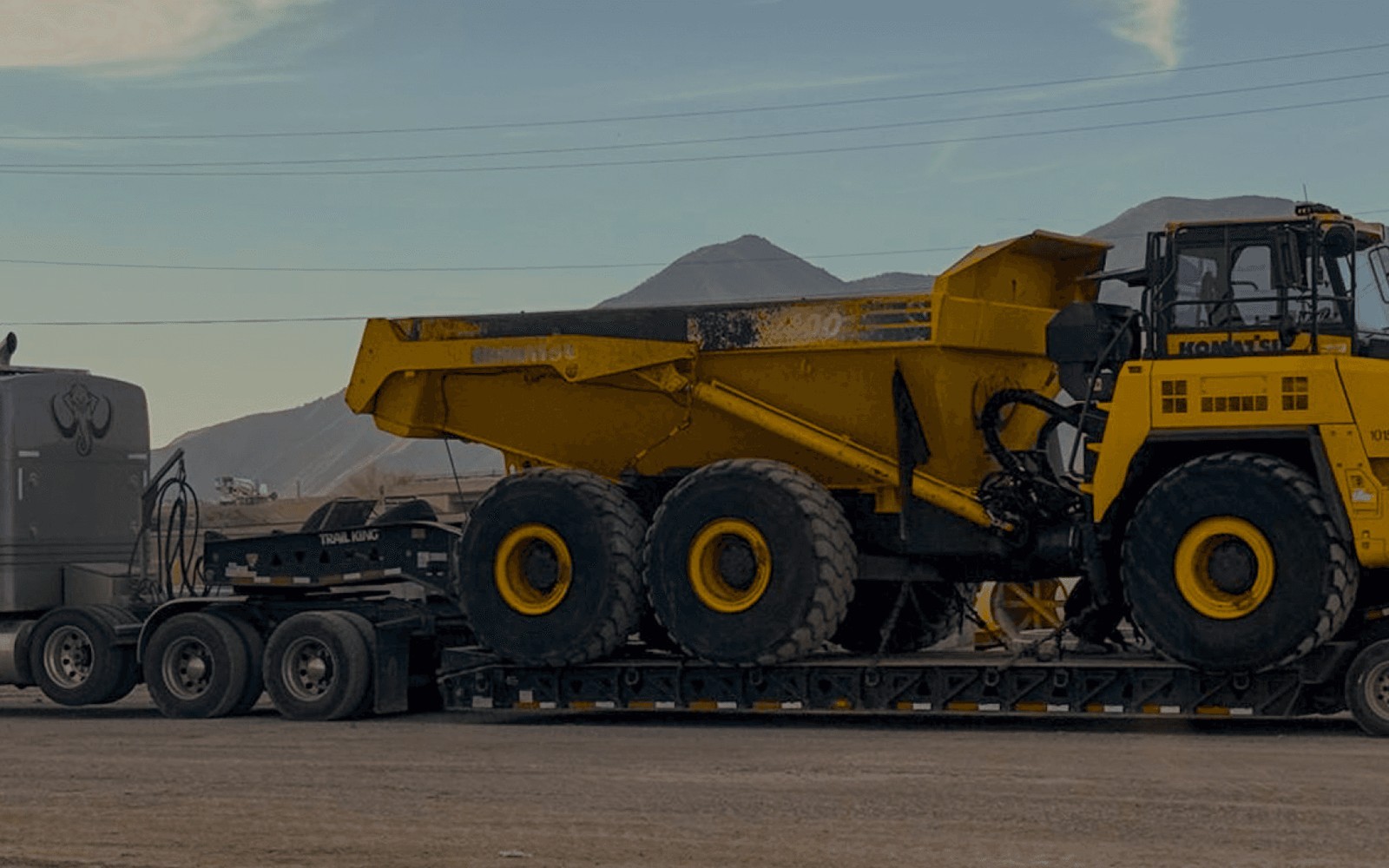
Finance mining equipment and deduct the full purchase price in year one under Section 179. Combines immediate tax savings with manageable monthly payments.
Section 179 of the Internal Revenue Code allows businesses to deduct the full purchase price of qualifying equipment placed in service during the tax year, rather than spreading that deduction over the asset's depreciation schedule. For a mining operation financing a haul truck or a crusher circuit, the combination of a financing structure that preserves cash and a full first-year deduction that reduces current-year tax liability is one of the more powerful capital tools available. The equipment goes to work on day one, the payment fits the cash flow, and the tax benefit is immediate rather than spread over five to seven years of standard depreciation.
The Section 179 deduction is not a secret, but it is frequently underused by mining operations that do not coordinate their equipment acquisition timing with their tax planning. The window is the tax year. Equipment must be purchased and placed in service within the same tax year the deduction is claimed, which means late-year acquisition decisions have real and immediate financial consequences worth quantifying before they pass.
How Section 179 Works with Equipment Financing
The critical point for mining operations is that Section 179 applies to owned equipment, meaning equipment acquired through a loan or through a capital lease (finance lease) with a nominal buyout. True operating leases where the lessee does not have a path to ownership do not allow the lessee to claim Section 179 on the leased asset because the asset is on the lessor's books, not the lessee's.
This creates a direct connection between the choice of financing structure and the tax outcome. An operation that finances a jaw crusher through a loan takes the full purchase price as a Section 179 deduction in the year of acquisition (up to the annual limit). The same operation that leases the same crusher under a true operating lease may be unable to claim that deduction. For operations where the tax savings from Section 179 are material, the financing structure is a tax decision as much as a capital decision.
The annual deduction limit under Section 179 changes periodically as Congress adjusts the provision. As of recent tax years, the limit has been in the range of $1 million to $1.16 million per year for most businesses, with a phase-out that begins when total equipment purchases exceed approximately $2.5 to $2.9 million in the same tax year. Mining operations with significant capital expenditure programs can hit the phase-out threshold, which is one of the reasons thatbonus depreciation, which is not capped in the same way, is often used alongside Section 179 for larger operations.
Work with your CPA to confirm the current year's limits and phase-out thresholds before structuring a transaction specifically around Section 179 savings. The provision has been modified several times, and the numbers in effect for your current tax year are the ones that matter for your planning.
Which Mining Operations Benefit Most
Section 179 is most valuable when two conditions align: the operation has significant taxable income in the acquisition year and the equipment purchase is large enough that the deduction materially reduces that income. A profitable mining operation facing a meaningful tax bill in the fourth quarter that also needs to replace a major piece of fleet iron is looking at the ideal Section 179 scenario. The acquisition reduces taxable income dollar for dollar up to the limit, the payment on the financing fits within operating cash flow, and the machine begins generating revenue while the tax savings hit the current year.
Operations with losses or very low taxable income get less immediate value from Section 179 because the deduction cannot create a net operating loss in most cases (there are exceptions). Those operations may find standard MACRS depreciation or bonus depreciation more useful depending on their specific position.
Timing matters. Equipment placed in service by December 31 of the tax year qualifies; equipment delivered January 1 of the following year does not. For an operation planning a major equipment acquisition that is also projecting strong profitability in the current year, the decision to accelerate the purchase into the current tax year rather than waiting until January can represent a deduction worth hundreds of thousands of dollars. Finance the machine in December, place it in service, and the deduction is earned. Wait until January and the deduction moves to the following year's return.
Jaw crushers,cone crushers, screening plants, and processing equipment all qualify as Section 179 property. So do haul trucks, excavators, dozers, and drill rigs placed in service in domestic operations. The qualifying equipment list in mining is broad, which means most planned capital expenditures can be evaluated through the Section 179 lens.
The Financial Math
The combination of equipment financing and Section 179 creates a cash flow dynamic worth understanding clearly. You borrow the purchase price of the equipment, making monthly payments over the loan term. Simultaneously, the full purchase price (up to the limit) is deducted on the current year's tax return, reducing your federal income tax liability by the deduction amount multiplied by your effective tax rate.
For a C-corporation at a 21 percent federal rate, a $500,000 equipment purchase generates a $105,000 reduction in federal tax liability. For a pass-through entity whose principals are in higher brackets, the same deduction is worth more per dollar. The after-tax cost of the equipment purchase is materially lower than the sticker price, which changes the economics of the acquisition relative to what the purchase price alone suggests.
Monthly payments on the financed amount continue over the loan term regardless of when the tax benefit is received. The practical result is that the tax savings arrive in a single year (as a reduced tax payment) while the loan payments are spread over three to seven years. Many operations use the tax savings as an accelerated principal payment to reduce the loan balance and finish the term early, further improving the total cost of the acquisition.
Section 179 Alongside Other Depreciation Tools
Section 179 and bonus depreciation can be layered in the same tax year and often are. Section 179 is taken first, up to its limit. Bonus depreciation then applies to any remaining depreciable basis in assets placed in service in the same year. For large mining capital expenditure programs where total purchases exceed the Section 179 phase-out, bonus depreciation handles the portion above that threshold.Bonus depreciation financingcovers that complementary structure in more detail.
Used equipment qualifies for Section 179 as well, which is relevant for operations acquiring late-model iron through the secondary market.Used mining equipment financingcombined with Section 179 treatment can make second-owner acquisitions significantly more attractive on an after-tax basis, particularly when the used purchase price is well below new-iron replacement cost.
For operations considering a lease versus loan decision specifically because of Section 179, confirm with your CPA which lease structures qualify. Finance leases (capital leases with nominal or fixed buyouts) typically allow Section 179. Operating leases typically do not. The distinction between those two lease types is covered in detail in ourFMV versus dollar buyout leasecomparison.