Finance drill jumbos, LHD loaders, haul trucks, and processing equipment for hard rock mining operations. Surface and underground. $50k minimum, funding in 1-2 weeks.
Hard rock mines run on availability. A drill jumbo down for an extended wait on parts financing, an LHD loader sidelined while a lender underwrites the deal for the third week in a row, a haul truck that cannot move because capital is tied up somewhere in approval: these are not accounting problems, they are production problems. We finance hard rock mining equipment because the machine has to turn to justify the capital behind it, and that fact is the whole conversation.
Hard rock mining encompasses a wide range of commodities including copper, gold, silver, lead, zinc, nickel, and iron ore, each with its own development cycle, permitting timeline, and capital requirement profile. What the operations share is a need for heavy, specialized equipment that general commercial lenders rarely know how to value or underwrite. We know this equipment and we know this business.
Minimum transaction size is $50,000. Most hard rock deals we fund fall in the $150,000 to $2 million range per unit or system, given the scale of the machines involved. Application-only approval is available up to approximately $400,000. Larger transactions require three months of bank statements and additional financial documentation. Funding closes in roughly one to two weeks from a complete application. New and used equipment both qualify, including units sourced from private sellers, dealers, or equipment auctions.
Equipment We Finance Across the Hard Rock Mining Cycle
Hard rock mines span surface and underground operations, and the equipment profile differs significantly between them. Surface hard rock mines rely on blasthole drills, hydraulic excavators, rigid-frame haul trucks, and wheel loaders. Underground operations require an entirely different fleet:drill jumbos for face development, LHD loaders for muck removal, underground haul trucks for ore transport, and roof bolters for ground support. We finance both sides of the operation.
On the surface,blasthole drillsare a primary capital item, handling pattern drilling for production blasts that break the ore before loading and hauling. These are long-service machines that hold value well and are strong financing candidates both new and used. Hydraulic mining excavators loading haul trucks are another common transaction, particularly as mines expand benches or open new phases.
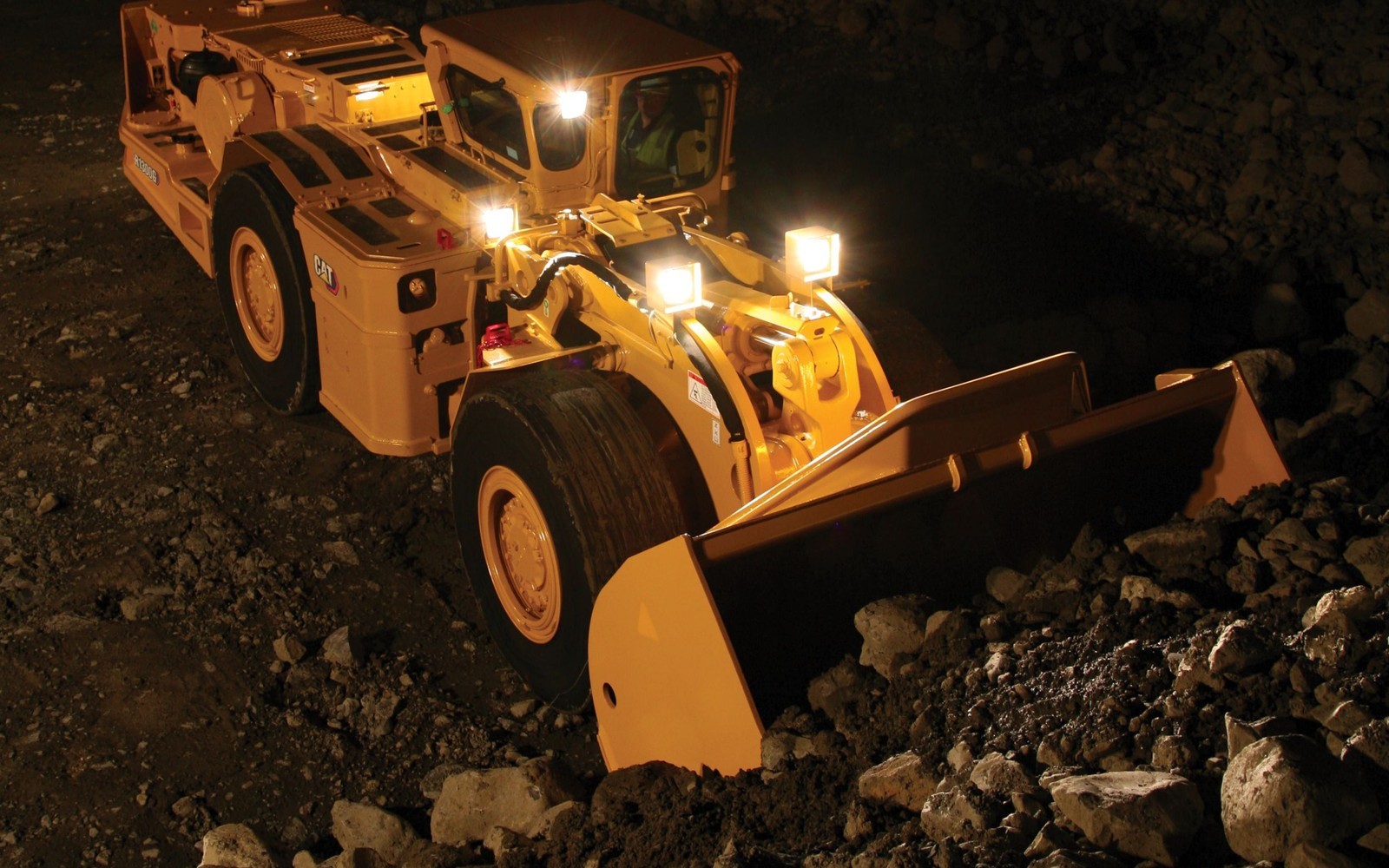
Underground, the drill jumbo is often the first bottleneck in development: a single face can only advance as fast as the drill can cut the round. An additional jumbo during a critical development phase pays for itself in months, not years.Underground LHD loadershandling muck from the face to the ore pass or directly to underground trucks are the other piece of the equation. Both are regularly financed on their own or together as a package.
- Blasthole drills and rotary drill rigs for surface operations
- Drill jumbos for underground face development
- Underground LHD loaders and scooptrams
- Underground haulage trucks
- Hydraulic mining excavators for surface loading
- Rigid-frame and articulated haul trucks
- Ore processing and grinding equipment
- Screening and conveyor systems
Who Comes to Us for Hard Rock Equipment Financing
The operators who call us fall into a few recognizable situations. Some are junior mining companies that have completed a feasibility study, secured permits, and are in the capital raise phase for initial equipment to start production. Others are established mid-tier miners adding capacity at an existing operation, either because commodity prices have improved the economics of pushing a new phase or because contract terms require increased output.
Contract miners are another significant segment. A contract mining company that wins a stope development or production contract needs to mobilize equipment quickly, often before the client's payment cycle starts. Financing the jumbo, LHD, and support equipment against that contract makes sense structurally, and we can accommodate that type of transaction with documentation from the client agreement.
Operators in districts like the Nevada gold belt, the Coeur d'Alene silver district of Idaho, or the copper porphyry country of Arizona and Utah often have long operating histories and strong asset bases but need to preserve cash for exploration drilling, development, or working capital. Financing production equipment rather than buying it outright keeps cash in the operation where it earns. Operators nearElko, NVandCoeur d'Alene, IDrepresent active markets we serve regularly.
What We Need to Finance Hard Rock Mining Equipment
The documentation requirement scales with deal size. For transactions under approximately $400,000, an application-only approval path is available: business name, time in business, equipment description, and purchase source. Above that threshold we add three months of business bank statements. For deals above $1 million, we typically request a profit and loss statement and balance sheet as well, not to second-guess the operation but to structure the debt service correctly against demonstrated cash flow.
Credit profile matters but is not the only factor. B and C credit operations are considered. Time in business matters: a mine with two or more years of operating history has a broader set of lender options than a startup, though startup programs are available. The quality of the asset also factors in. A late-model Sandvik drill jumbo or Epiroc LHD loader has clear market value and strong remarketing appeal, which affects what lenders will approve and at what advance rate.
If you are refinancing equipment already on your books, we need a payoff statement from the current lender and documentation establishing current market value, either a dealer appraisal or recent comparable sales. Equity above the payoff can be returned as cash in acash-out refinance.
Related Financing Options for Hard Rock Operators
Hard rock mining operations often span multiple equipment categories and multiple financing structures simultaneously. A mine in active production might carry financed haul trucks, leased jumbos, and a sale-leaseback on a wheel loader that was purchased outright years ago. We handle all three simultaneously, either as separate transactions or as a portfolio relationship.
Operators ingold miningandcopper miningoften share the same underlying equipment profile but face different commodity price cycles and reserve economics. We have financed equipment in both sectors and can tailor structures around the specific cash flow characteristics of each operation. Operators considering a sale-leaseback on existing iron should also look atsale-leaseback financingas a way to recapitalize without taking on new debt.