Finance drill jumbos, LHD loaders, underground trucks, and longwall systems for underground mining operations. Hard rock and coal both served.
Equipment availability underground does not have the same safety valve as surface mining. On an open pit, you can sometimes re-sequence work, run another bench, or adjust the mining front to compensate for down equipment. In an underground mine, a broken main haulage truck in a single-access decline means production stops until the machine is repaired or replaced. The constraint geometry of underground operations is why availability is so much more tightly coupled to production than on surface -- and why equipment capital that closes fast and finances reliably matters more.
We finance underground mining equipment for hard-rock operations (gold, silver, copper, lead-zinc, nickel, uranium) and for underground coal. The equipment universe includes development drill jumbos, production drills, LHD loaders, underground haulage trucks, shaft-sinking equipment, longwall systems, continuous miners, roof bolters, shuttle cars, and associated infrastructure like ventilation fans and pumping systems. Minimum transaction $50,000. Application-only financing to roughly $400,000 for qualified borrowers. New and used equipment both eligible.
The Underground Equipment Suite
Underground mining equipment is purpose-built for confined working spaces, high humidity, corrosive conditions, and the need for serviceability in locations where a crane does not simply drive up. That purpose-built nature means the secondary market has depth -- experienced buyers know what they are looking at and what a machine in good documented condition is worth.
Development and production drilling--Drill jumbos(also called boom drills or face drills) handle the advance of development headings and stope drilling. Two-boom jumbos are standard for access development; single-boom units work in tighter profiles. Sandvik, Epiroc, and Atlas Copco build the machines most commonly seen in North American underground hard-rock mines.
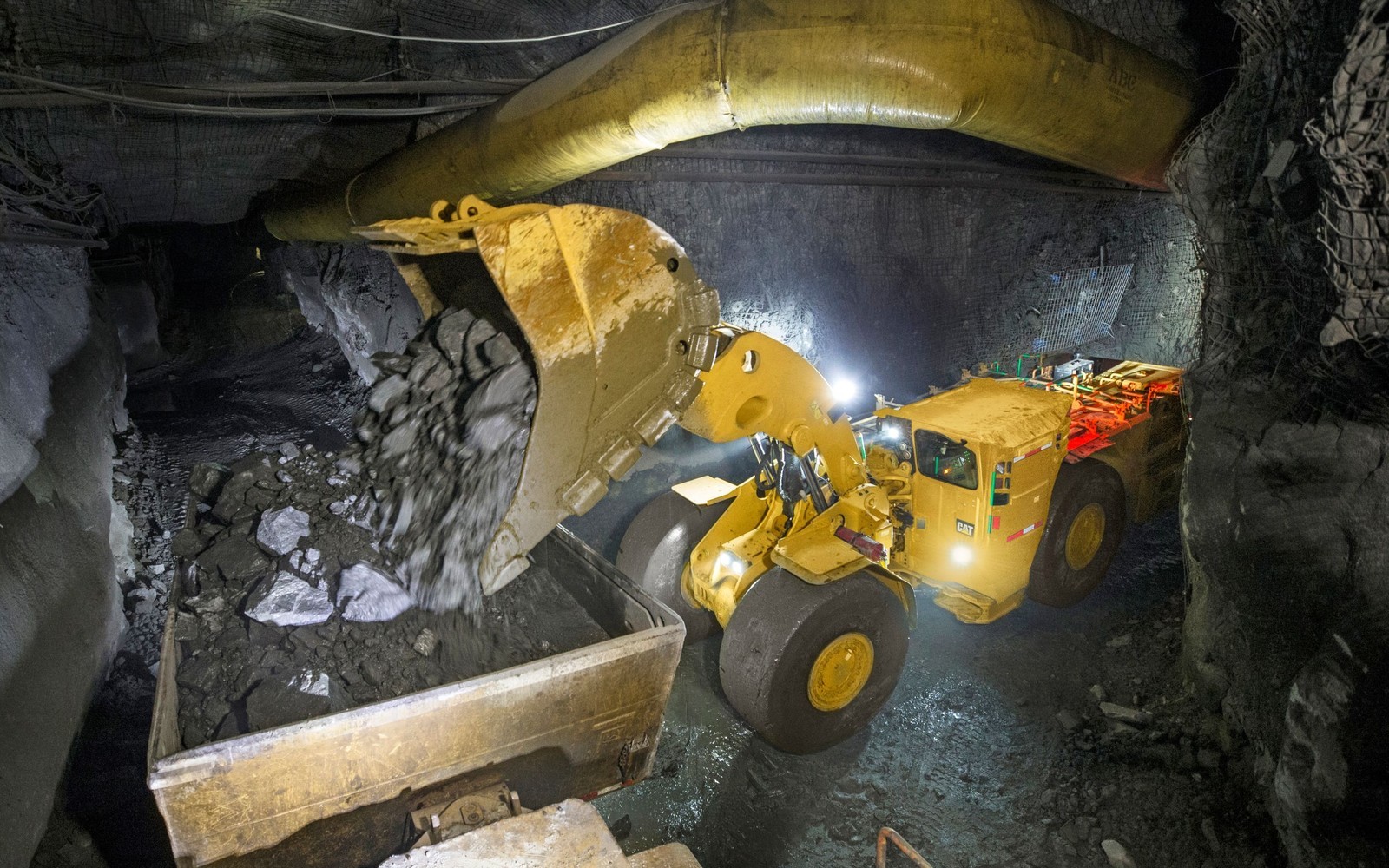
Loading--LHD loadersrange from 3.5-cubic-yard units appropriate for narrow-vein gold mines to 18- to 25-cubic-yard machines used in large sublevel open stopes. The LHD is the production workhorse of the modern hard-rock underground mine, replacing the separate load (slusher) and haul (tramming cars) equipment of an earlier era.
Haulage--Underground haulage truckscarry ore from the orepass or loading point to surface along decline haulage roads. Articulated underground trucks in the 20- to 65-ton payload class are the standard; Sandvik TH series and Caterpillar AD series are common platforms.
Underground coal-specific equipment--Continuous miners,longwall systems,roof bolters, andshuttle carsform the production system for underground coal. These are specialized to the coal mining environment and covered in more depth for coal-specific operators elsewhere on this site.
Documentation and Credit Requirements
Underground mining companies range from majors with investment-grade credit to small owner-operated decline mines with one or two LHDs and a drill. Our program covers that full range, which means the documentation requirements and approval process vary based on the operator's profile and transaction size.
For transactions under approximately $400,000, the application-only path avoids the requirement for tax returns or CPA-prepared financial statements. A completed credit application, business formation documents, and the machine's details are typically sufficient for an initial credit decision within 24 to 48 hours.
Larger transactions go through a full underwrite. Three months of business bank statements, two years of tax returns or reviewed financial statements, and information about the mine's production and status are the core package. An operator with a strong production record and known ore reserves in development can support a more favorable underwrite than a pure exploration-stage company with no production history.
B and C credit situationsare considered. A credit score affected by prior equipment debt, a commodity price downturn, or a restructuring event does not automatically disqualify a transaction. We look at current financial performance, the equipment's collateral value, and the operator's practical experience in the mine context.
Related Financing Structures
Beyond standard equipment loans and leases, several specific financing structures serve underground mining operators well.
TheSale-Leaseback Financingconverts owned underground equipment to working capital while the machine stays in production. An operator who bought a drill jumbo outright two years ago and has a capital need today -- a major development heading, a pump system upgrade, a new ore zone requiring additional LHDs -- can monetize the owned equipment without selling it. The machine keeps working; the capital comes in at closing.
Working capital financing for mining operations provides unsecured or lightly secured credit for operating expenses between ore sales, which can extend the useful life of an equipment financing relationship. Underground mines with longer ore-to-cash cycles -- where ore is processed and sold months after mining -- sometimes need a working capital line to bridge the gap.