Finance a Cat D11 dozer for mining, pit maintenance, and haul road construction. New and used financing, refinance, and sale-leaseback. Lenders who know mining iron. Get a quote.
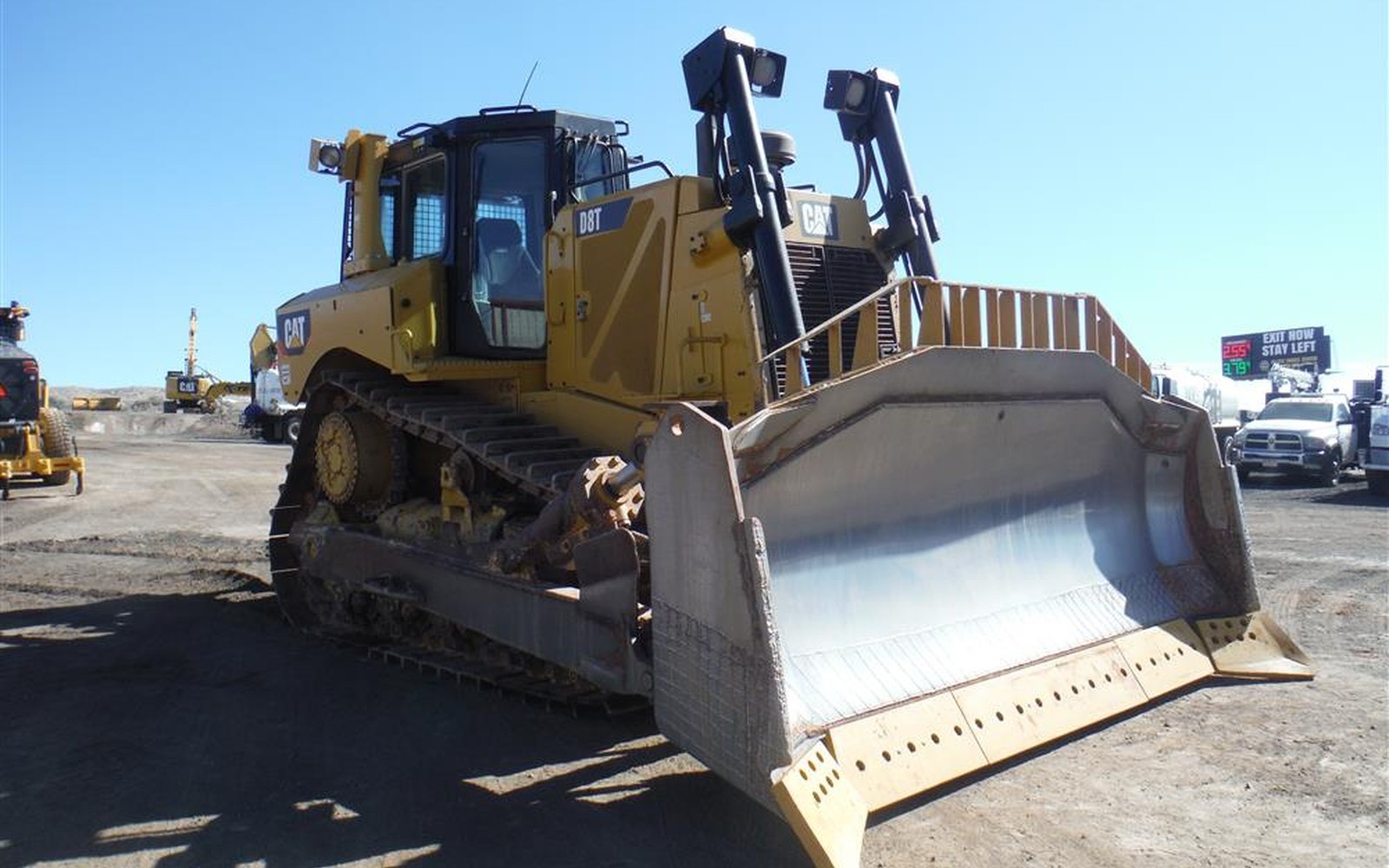
Haul road conditions set the pace for the whole operation, and a Cat D11 is what serious surface mines use to keep those roads in shape. Beyond road maintenance, the D11 handles pit floor work, ramp construction, and waste dump compaction at production scale. It is the largest track dozer Caterpillar builds, running over 100 metric tons of operating weight in the current D11T configuration, and it earns its place on a mine budget as the machine that makes everything else run better. We finance Cat D11 dozers for purchase of new and used units, for refinancing of existing obligations, and for sale-leaseback on machines that operators own outright.
The D11's price point puts it firmly in the range where lender selection matters. This is not a commercial construction dozer that a community bank will finance on a simple application. It needs lenders with mining asset experience and residual value data for large tracked equipment. Those relationships are exactly what we maintain.
Cat D11 Specifics That Affect the Financing Deal
The current Cat D11T uses a Cat 3508C engine, a four-stroke diesel producing approximately 850 net horsepower. The machine comes in two primary blade configurations: the SU blade (semi-universal) for general dozing and the U blade (universal) for high-volume light material. Operating weight varies by configuration but runs approximately 115 to 120 metric tons. The undercarriage is a major capital component on a machine of this size, and its condition at time of financing is a key underwriting variable.
Earlier D11 variants, the D11N and the original D11R, are still in service at many mines. The N series was produced from the late 1980s through the mid-1990s; the R series followed and ran through the mid-2000s. A well-maintained D11R or D11N with documented component history remains a financeable and productive machine, though lenders apply more conservative advance rate assumptions as machine age increases.
Track and undercarriage wear on a D11 is directly proportional to ground conditions and push distance. Mines with abrasive rock types or rocky floor conditions accelerate undercarriage wear. We ask about the machine's operational environment as part of the deal presentation, not just total hours, because two D11s at 15,000 hours can be in very different condition depending on what they have been doing.
The D11 has a significant secondary market, supported by the machine's broad deployment across major surface mines globally. Mine fleet dispersals, equipment dealers specializing in large mining dozers, and international auction activity all contribute to residual value data that lenders use to establish their advance rates and term limits. We know those comparables and use them to position deals accurately.
Where the D11 Works and Why It Matters to Financing
The Powder River Basin coal mines in Wyoming, where some of the highest-volume surface mining in North America takes place, run large D11 fleets for overburden stripping, haul road maintenance, and spoil pile management. Operators based inGillette, WYand operating in the Basin represent a concentration of D11 users we work with regularly. The scale of those operations and the long production horizons mean financing structures built for multi-year amortization are the standard.
Open-pit copper and gold mines in Nevada and Arizona rely on D11s for pit floor maintenance and waste dump operations. The iron ore operations on Minnesota's Iron Range run large dozers in concentrations along the Mesabi Range. Operators inVirginia, MNand the surrounding Iron Range communities have distinct cash flow characteristics tied to iron ore pellet pricing and steel mill demand, and we understand how to present those operations to lenders who are familiar with the commodity cycle.
For broader mining dozer financing context, ourmining dozer financingpage covers the full spectrum of large tracked dozers, including Komatsu D475 and Liebherr PR 776 alternatives where operators are evaluating options across brands.
Deal Structure on a Cat D11
New D11T transactions typically run five to seven years for established mining companies. The asset's long service life (a well-maintained D11 with multiple rebuild cycles can exceed 50,000 hours over its operational lifespan) supports longer amortization when the mine's production horizon justifies it. Lenders who specialize in mining assets understand that a rebuilt D11 at 30,000 hours is not at end of life; it is midpoint, and the next major rebuild cycle lies ahead.
For operators considering how financing interacts with tax treatment, the choice between a loan structure (where the operator holds title and takes depreciation) and a lease structure (which may offer off-balance-sheet treatment depending on the lease classification) matters at a D11's purchase price. Ourmining equipment leasingprograms offer lease options alongside loan structures, and we walk through the tax implications with your accountant's involvement before you commit to a structure.
A sale-leaseback on a free-and-clear D11 releases the full appraised value as working capital while keeping the machine in the yard under a lease. For operations where the D11 is critical to daily production and paid off, that structure converts a static asset into active liquidity without any operational disruption.
Operators also explore whether a D11 fleet can be refinanced alongside other large assets. Lenders sometimes prefer portfolio deals that include multiple machines, as it diversifies their collateral exposure and can simplify the overall banking relationship for the operating company.