Finance a Cat 777 haul truck in the 100-ton payload class. New, used, refinance, and sale-leaseback options. Strong financing team for mining operators. Get quotes in 24 hours.
Shift productivity on a Cat 777 is measured in tons moved per hour, and operators running 100-ton class trucks in aggregate quarries, copper pits, and coal mines know how quickly a stalled deal or slow financing process erodes that number. The 777 sits in one of the most versatile payload classes in surface mining: large enough to move serious tonnage, manageable enough to operate on haul roads that cannot accommodate a 240-ton machine. That versatility makes it a mainstay at quarries, mid-size open pits, and mine development projects where full-scale ultra-class trucks would be underutilized.
We finance Cat 777 trucks across all variants, from the current 777G to older E and F series units in well-maintained used condition. Our minimum transaction is $50,000, which most 777 deals exceed comfortably. We work with new and used equipment, purchase and refinance transactions, and sale-leaseback arrangements for operators who already own their trucks free and clear.
What the 777 Deal Looks Like
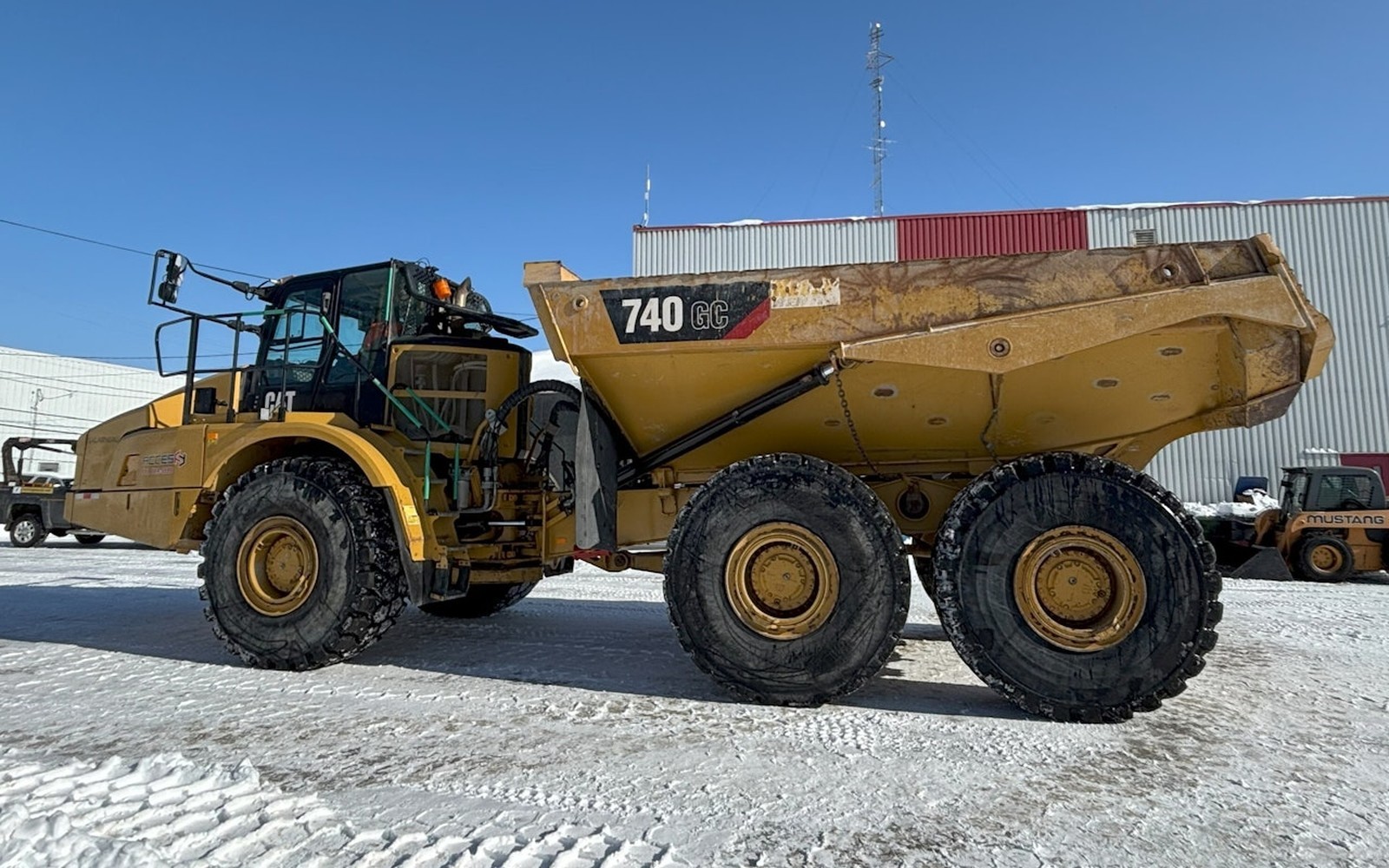
The Cat 777G, the current production model, carries a nominal payload rating around 100 short tons and is powered by a Cat C27 ACERT engine producing roughly 900 net horsepower. The earlier 777F shares the same payload class with a C27 engine variant. These are well-supported machines globally, with Cat dealer networks providing parts and rebuild capability across most mining geographies. That broad support infrastructure makes used 777s attractive to lenders who take residual value seriously.
From a financing standpoint, the 777 often falls into a transaction range that can qualify for streamlined documentation. Deals up to roughly $400,000 can frequently be structured on an application-only basis with three months of bank statements, avoiding the full financial statement package that larger transactions require. Ourapplication-only financingprogram is worth considering if your 777 acquisition falls in that range and you want to move quickly.
For larger fleet acquisitions, for older trucks requiring more detailed underwriting, or for refinances where existing debt payoffs complicate the capital structure, we shift into a more complete documentation package. We tell you upfront which path applies to your specific situation.
Refinancing and Sale-Leaseback on Existing 777 Fleets
Operators running 777s through an earlier financing cycle sometimes find themselves sitting on improved equity, either because paydowns have outpaced depreciation or because the used market for this truck class has held value better than the original deal assumed. Refinancing into current terms can reduce monthly payments meaningfully when credit and market conditions have shifted in the operator's favor.
Arefinance of existing mining equipmentpays off the prior obligation and establishes new terms. In some cases, particularly where a truck has been paid down significantly, a cash-out component is available. That working capital can fund tires, maintenance reserves, operator costs, or additional equipment purchases without straining the operation's liquidity.
Sale-leaseback on a free-and-clear 777 is another option we structure regularly. The truck is valued at current market, and the proceeds from the notional sale go to the operator as working capital while the lease payments replace the truck's ownership cost going forward. For quarry and aggregate operators managing seasonal cash flows, that lump-sum injection at the right time can be a meaningful operational tool.
Operators inSalt Lake City, UTand the surrounding Wasatch Front region, where aggregate and construction activity is heavy, see the 777 used widely in quarry contexts. We are familiar with the cash flow patterns of those operations and can structure financing that fits the seasonal rhythm rather than fighting it.
Where the 777 Earns Its Keep
The 777 has a long track record in aggregate quarrying, where haul distances are shorter and the smaller payload class remains efficient relative to the road grades and pit geometries typical of those operations. It also shows up in mine development phases, where access road limitations or limited stockpile capacity make 100-ton trucks more practical than 240-ton alternatives.
In coal country, 777s appear alongside larger trucks on operations that have mixed haul profiles. In gold and silver mining, the 777 sees use both at mid-scale open pits and at some underground haulage ramps where surface access is constrained.Hard rock mining operationsin the western US run 777s in a variety of applications, and we see a steady flow of financing requests from operators in Nevada, Arizona, Colorado, and Idaho.
The quarry and aggregate market is where the 777 is arguably most concentrated. Ouraggregate mining equipment financingprograms cover those contexts specifically, including the seasonal cash flow structures that many quarry operators prefer.
Get Your Cat 777 Financing Quote
The conversation starts with the basics: year, model, hours, current condition, and what you are trying to accomplish. From there we match your deal to lenders who know this asset class and get you a term sheet fast. Most operators are in conversation with lenders within 24 hours of submitting a complete inquiry.
See our fullCaterpillar equipment financingprograms, or reviewhaul truck financingoptions if you are comparing the 777 against other payload classes.