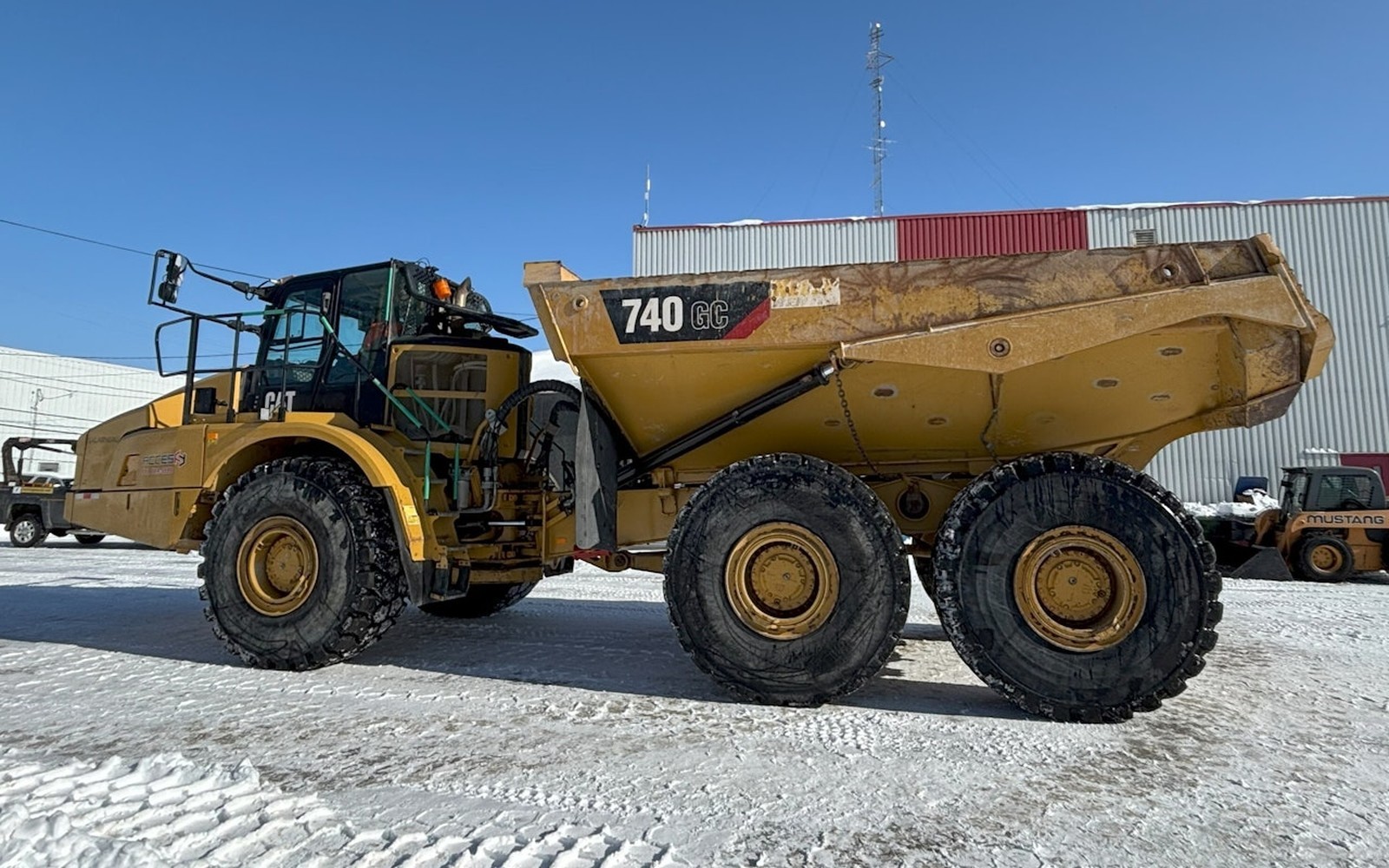
Finance the Cat 797F, the largest mechanical-drive haul truck in Caterpillar's fleet at 400-ton class. Structured financing for new, used, and sale-leaseback. Quote in 24 hours.
The Cat 797F is the largest mechanical-drive haul truck Caterpillar produces, rated at approximately 400 short tons of payload, and financing one requires a lender relationship calibrated for that scale. Most banks that handle light commercial equipment have no framework for an asset at this price point or with this duty-cycle complexity. We do. We have placed financing on ultra-class haul trucks for open-pit copper and oil sands operations, and we understand what documentation, what structures, and what lender conversations make these deals work.
Production targets at mines running 797Fs do not have much margin for unplanned downtime, including financing delays. Our process is designed to move alongside acquisition and commissioning timelines, not lag behind them. We handle purchase financing for new units, refinancing of existing obligations, and sale-leaseback structures for operators who own their trucks outright and need to free that equity for other capital priorities.
Asset Characteristics That Drive the 797F Deal
The 797F runs a Cat C175-20 engine, a 20-cylinder diesel producing approximately 4,000 gross horsepower. The drivetrain is mechanical, which is the defining characteristic that separates this truck from electric-drive competitors at similar payload classes. Mechanical drive means rebuild infrastructure is more broadly available globally, but it also means the drivetrain is under substantial load at every loaded cycle. In open-pit copper operations, where grade hauls can be steep and cycle lengths long, duty cycle analysis matters to lenders and to us.
Payload management is a live issue on 797Fs. These trucks operate under payload monitoring systems, and ops that consistently run overloaded see accelerated component wear. Lenders pricing residual risk on a used 797F will want to understand site payload discipline as part of their underwriting. We surface that information proactively rather than letting it become a surprise late in due diligence.
The 797F body is a significant capital component on its own. Liner systems, tailgates, and body material choices all affect long-term maintenance cost. When we structure a transaction, we account for the full configured asset value rather than just the base chassis.
Oil sands operations in Alberta and large open-pit copper mines in the American Southwest and Chile represent the heaviest concentrations of 797F deployment. Operators in those environments are familiar with financing structures that account for the cyclical commodity pricing that drives their cash flows. We build payment structures with that in mind rather than forcing a mining operation into a payment schedule that ignores commodity-linked revenue patterns.
Deal Structures at This Scale
New 797F transactions are multi-million dollar purchases. Financing terms at this level typically run five to seven years for strong credits, with amortization schedules matched to the mine's expected production horizon where that data is available. For a mine with a defined 15-year reserve, a seven-year term is a reasonable structure. For a contract miner on a three-year mining contract, a shorter-term structure with buyout options at contract end may serve better.
Sale-leaseback on a 797F can produce significant liquidity. A truck with clear title that appraises well can generate working capital equivalent to a substantial portion of its replacement cost, which can then fund pit development, sustaining capital, or fleet additions. We work throughsale-leaseback financingstructures regularly and can walk through the tax and accounting implications at a high level, though we recommend operators also consult their CFO or tax advisor.
For operators exploring whether a lease structure offers advantages over a loan, theFMV versus dollar buyout leasecomparison is worth understanding at this asset scale. The residual value treatment at lease end has real implications on the effective cost of capital for an asset with the 797F's price point.
Where 797Fs Run and What That Means for Financing
The largest concentrations of 797F operations in the US fall in open-pit copper country in Arizona and the coal-removal operations in Wyoming's Powder River Basin. Mines in the Basin run some of the highest annual tonnage of any surface operation in the country, and the 797F's payload class is suited to that volume.Gillette, WYis the hub for Powder River Basin coal equipment, and we are active with operators based there.
In Arizona, operations nearSafford, AZand in the Globe-Miami copper corridor run large fleets of ultra-class trucks. The copper market's cyclicality means operators there have seen both expansion and contraction phases, and they tend to be sophisticated about financing structures that provide flexibility during commodity price softening.
For open-pit gold and copper financing broadly, ouropen-pit mining equipment financingprograms are worth reviewing alongside this model-specific page. The industry context shapes what terms are available and how lenders approach residual value.
Documentation for a Large-Ticket Mining Transaction
At the 797F's acquisition price, lenders typically want two years of business financial statements, a current balance sheet, a schedule of existing equipment and debt obligations, and three months of bank statements. If the purchase is tied to a specific mine or contract, the mine plan or contract document strengthens the deal considerably. We will tell you exactly what each lender in our network needs rather than asking you to assemble a generic package that may not serve every conversation.
Personal financial statements from principals are sometimes requested at this scale. It depends on the operating entity's size and credit history. A large mining company with years of operating history generally does not need personal guarantees; a smaller operator or a new entity may.
Credit profile matters but is not the only variable at this price level. We have closed deals with B-credit operators on quality assets with strong mine plans. The deal's structure, the asset's condition, and the operation's demonstrable cash flow carry real weight alongside the credit score.