Finance jaw crushers for primary crushing in mining, quarry, and aggregate operations. Stationary and portable units. application-only programs reaching $400k. Get a quote.
Primary crushing sets the size that all downstream processing can work with. A jaw crusher taking run-of-mine material from the pit and reducing it to a product size the secondary stage can handle is the first constraint in the crushing circuit, and its availability rate determines how much material the entire circuit can process per day. Every hour a jaw crusher sits down is a direct reduction in circuit throughput, and throughput is revenue.
We finance jaw crushers for hard rock mining, quarry, and aggregate applications: stationary primary crushers installed as permanent circuit components, portable jaw crushers used in contractor and mobile crushing applications, and used units acquired through the active secondary market that moves significant jaw crusher volume each year. The asset is well-understood in the financing industry, residual values are trackable, and we close these deals efficiently.
Our minimum is $50,000. New small-to-mid-size jaw crushers often fall between $80,000 and $500,000. Large stationary primary jaw crushers for major mining operations can exceed several million dollars. Application-only processing applies up to approximately $400,000; larger installations require additional documentation but still close faster than a bank credit process.
Jaw Crusher Types and Specifications
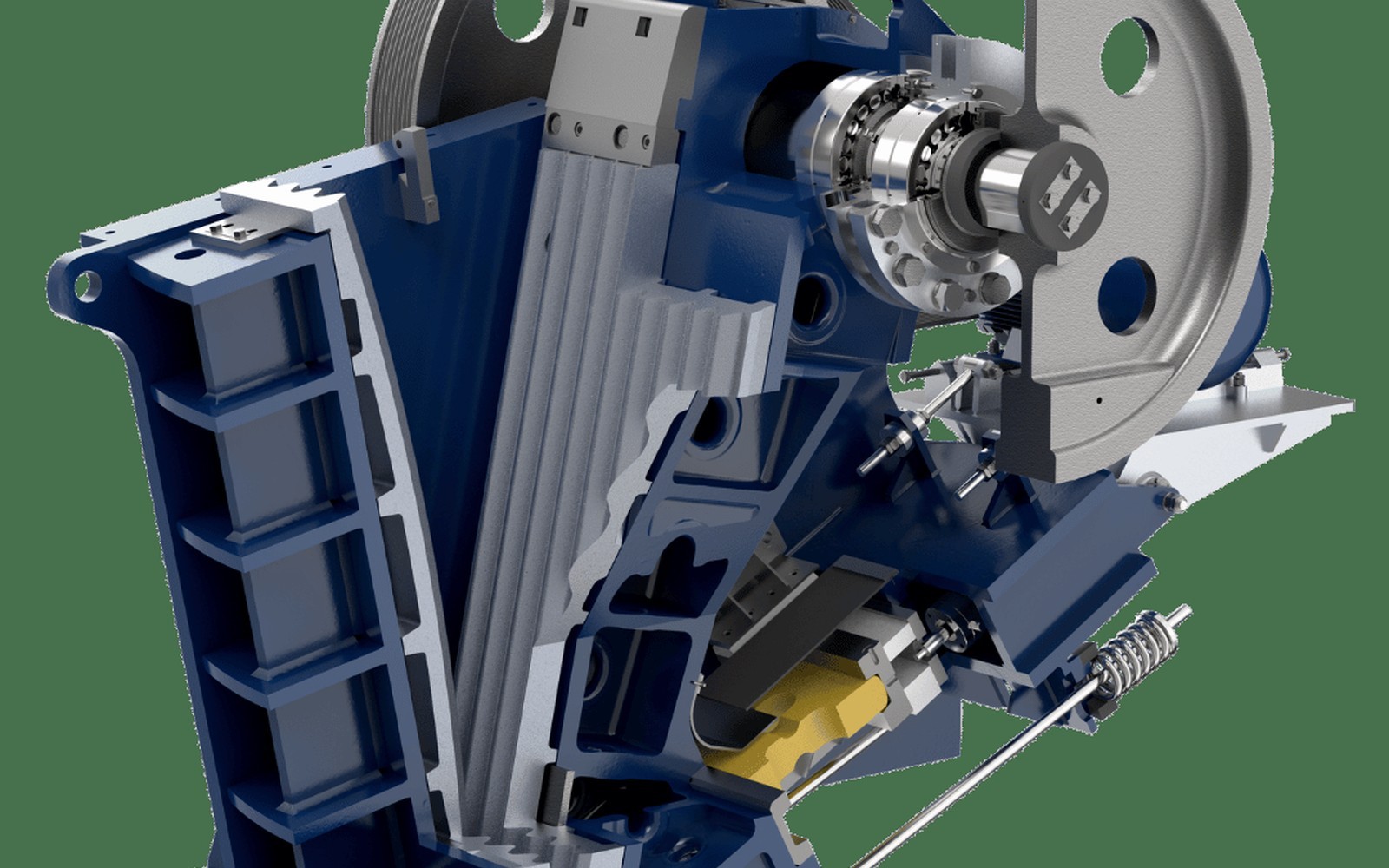
Jaw crushers operate on the compressive principle: a fixed jaw and a moveable swing jaw create a converging chamber that applies progressive compression to rock as it moves down through the chamber. The machine's capacity, reduction ratio, and product gradation are determined by the feed opening size, the closed side setting (CSS), and the stroke of the swing jaw. A wider feed opening accepts larger run-of-mine material; a tighter CSS produces finer product but at reduced throughput.
Common sizing for jaw crushers is expressed as feed opening width by depth: a 1200 x 900 machine (sometimes called a 48 x 36 in older U.S. sizing conventions) accepts approximately 900 mm maximum feed and can process 500 to 1,000 tonnes per hour depending on material and CSS. The Metso Nordberg C160, for example, is a 1600 x 1200 mm primary jaw crusher designed for high-capacity open-pit primary crushing applications that processes several thousand tonnes per hour at the right settings and with appropriate feed control. This is a heavy capital item and is financed as such.
Portable jaw crushers, typically track-mounted units in the 25 to 500 tonne-per-hour range, serve quarry contractors and portable crushing operations. Brands like Metso's Lokotrack, Sandvik's QJ series, Terex Finlay, and Powerscreen offer track-mounted jaw crusher plants that can be mobilized between sites. These units command strong residual values because of their flexibility, and they finance well against that residual.
Buying New vs. Used Jaw Crushers
New jaw crushers from Metso, Sandvik, or Terex come with warranty coverage, current wear part programs, and in some cases integration with mine or quarry management software. Delivery times on new primary crushers can run several months for large stationary units, and buyers who need capacity now routinely turn to the used market rather than waiting.
The used jaw crusher market is active and deep. Stationary units from closed quarries, mine expansions that replaced smaller primary crushers, and equipment dealers who buy from estate and bankruptcy sales all feed the market. A well-maintained jaw with documented wear part change history, a recent inspection of the main frame, toggle assembly, and swing jaw bearings, and a current cheek plate measurement is a sound acquisition. We finance used jaw crushers through dealers and through direct private party purchases. Ourused equipment financinghandles the full range of sourcing channels.
Refurbished units, particularly those that have gone through a toggle and bearing rebuild with new wear parts, represent a middle ground. We evaluate them based on the rebuilder's documentation and any warranty they provide on the rebuilt components. A properly documented rebuild can support terms comparable to a used machine in similar condition without the rebuild.
Operations That Finance Jaw Crushers
Quarry and aggregate producers represent the largest consistent buyer group. Acrushed stone operationadding capacity or replacing a worn primary unit, asand and gravel producerexpanding their processing line, or a new quarry development getting its primary circuit online for the first time are all common financing scenarios. The revenue backing these deals is well established in the form of existing sales volume or contracted supply agreements.
Hard rock mining operations that process ore through a primary crushing stage before mill or heap leach application are another consistent market. Agold minein Nevada feeding a heap leach pad runs its ore through a jaw crusher to achieve the top size required for uniform heap permeability. The crusher throughput directly determines the heap loading rate and ultimately the gold recovery rate. Financing a jaw crusher in that context means financing a production constraint removal.
Portable crushing contractors who take track-mounted jaw plants to quarry, demolition, and road base projects need equipment that moves fast and closes fast. Contract awards in the portable crushing market often come with short lead times between contract signing and mobilization requirement. We have structured deals for portable jaw crushing plants that went from application to funding in under ten business days to meet contractor deadlines. Buyers specifically interested in theMetso Nordbergline or theTerex Finlayproduct range will find the same financing terms applied regardless of make.
Deal Structure and Terms
Jaw crusher financing runs on 48 to 84 month terms in most cases. Stationary primary crushers that are permanent circuit components favor longer terms that amortize the capital over their long service life. Portable units that may be traded or redeployed on a 5-7 year cycle favor shorter terms that maintain flexibility. The right structure depends on how you plan to run the machine and whether you want ownership at the end of the term or the option to return and upgrade.
Lease structures work particularly well for portable jaw crushers where the technology cycle is meaningful and the option to exchange at the end of lease term has value. A contractor who wants to keep their crushing fleet current rather than running older iron into obsolescence finds a lease structure more useful than a long-term loan with a fully depreciated asset at the end.
For operations evaluating tax treatment, jaw crushers and crushing plant components often qualify for Section 179 expensing up to the statutory limit and for bonus depreciation on the remaining basis. We can structure deals that align with those tax strategies when the accountant wants the financing to support a specific depreciation plan.