Finance haul trucks, excavators, drills, and processing equipment for gold mining operations. New and used, B/C credit considered, funding in 1-2 weeks.
Production tonnage at a gold mine tells the whole story. Strip ratio, ore grade, haulage cycle times, mill throughput, recovery percentage -- every number funnels back to how much iron is available and how hard it is working. A haul truck sitting down for a major component rebuild is lost tons per hour. A mill feed conveyor with deferred maintenance is a bottleneck that cannot be financed away once it fails. Equipment availability drives gold output, and gold output services the debt. That is the math we start with.
We finance the heavy iron that gold operations run: rigid-frame and articulated haul trucks, hydraulic mining excavators, large wheel loaders, rotary blasthole drills, SAG and ball mills, ore processing circuits, and associated infrastructure. Producers from Nevada's Carlin Trend to Alaska's Fairbanks district to Arizona's historic Goldfield corridors use iron across a wide value range. We work from $50,000 minimums through multi-machine packages well above $1 million, with application-only decisions available up to roughly $400,000 for qualified borrowers. New equipment, late-model used iron, and machines coming off lease all qualify.
The Iron That Runs a Gold Mine
A surface gold operation's primary expense categories are drilling and blasting, loading and haulage, and processing. Each requires capital equipment with long expected service lives -- a Cat 793 haul truck is designed for roughly 20,000 to 30,000 operating hours before major rebuild, and even rebuilt machines retain substantial residual value. That resale depth is part of why lenders can underwrite mining iron comfortably when the deal is structured correctly.
The equipment classes we finance most often for gold producers include:
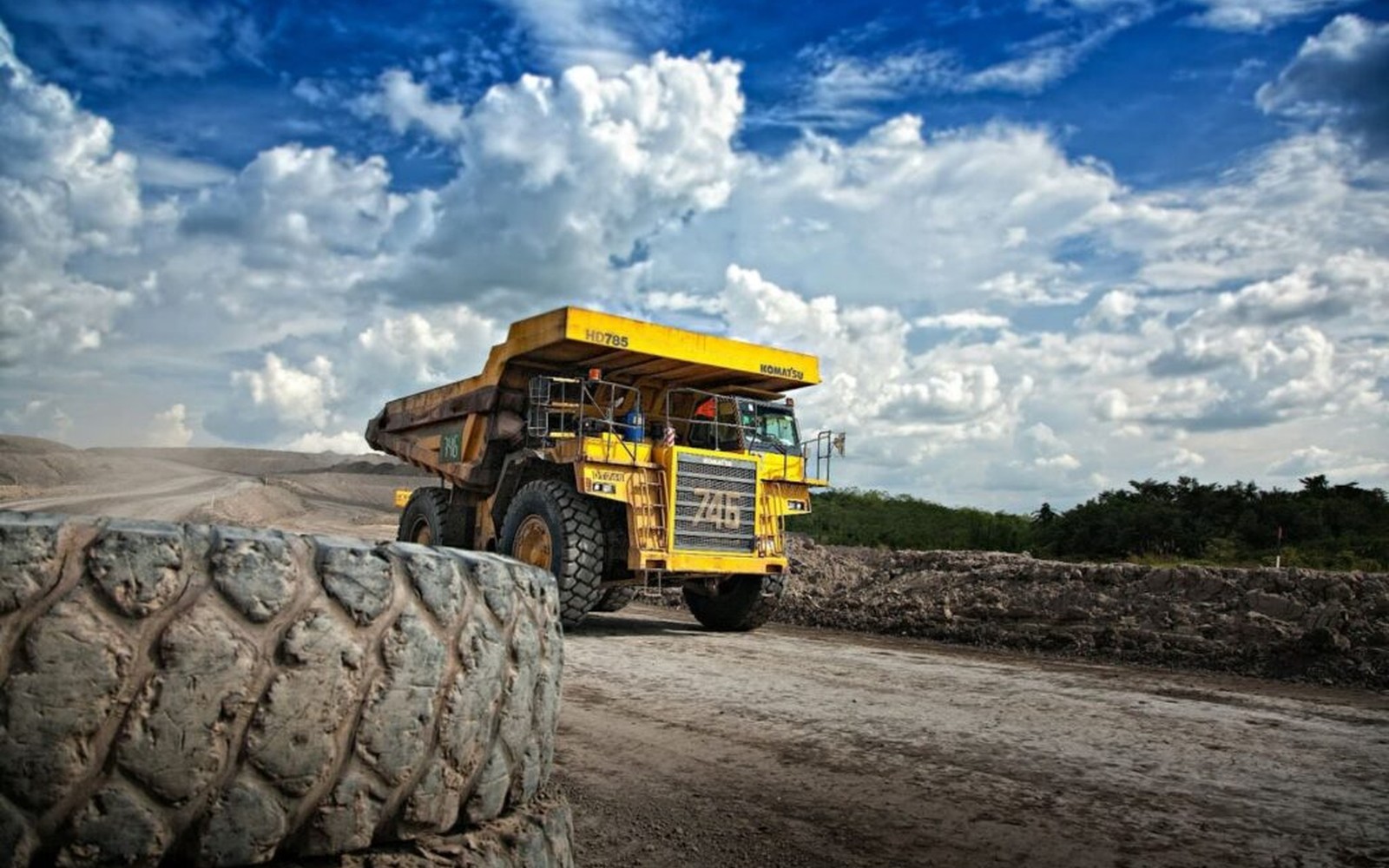
- Rigid-frame haul trucksin the 150- to 400-ton payload class, including Cat 793, Komatsu 930E, and Liebherr T 264 platforms
- Hydraulic mining excavatorsused at the shovel face for loading trucks and managing ore versus waste classification
- Blasthole drillsfor pattern drilling ahead of the blast cycle
- Ore processing equipmentincluding crushing, grinding, and leach circuit components
- Conveyor systemsmoving crushed ore from the primary crusher to the mill or heap leach pad
Underground gold operations add a different equipment mix: drill jumbos, LHD loaders, underground haulage trucks, and paste fill systems. Both surface and underground work falls within our financing scope.
Nevada, Alaska, and the Other Gold Corridors
The United States produces roughly 200 metric tons of gold per year, with Nevada accounting for approximately three-quarters of domestic output. The Carlin Trend, Cortez Hills, Turquoise Ridge, and Twin Creeks operations in Elko and Humboldt counties run some of the highest-tonnage open-pit and underground operations on the continent. Equipment fleets there are large, maintenance costs are significant, and the lenders who understand the geology and the capital cycle earn long-term relationships.
Outside Nevada, meaningful gold production comes from Alaska (Fort Knox, Pogo, Donlin Creek in development), Montana's Stillwater corridor (historically platinum and palladium but with gold credits), and smaller operations in Colorado, Idaho, South Dakota, and Arizona. Contract miners and junior producers in these states often face tighter capital access than the majors, which is exactly where we do our best work. Ourused mining equipment financingprogram lets operators source quality iron from the secondary market at 40 to 60 cents on the dollar compared to new replacement cost, preserving capital for working requirements like reagents, power, and labor.
New Equipment vs. the Secondary Market
A new Cat 793F or Komatsu 930E-5 running a full warranty is a different proposition than a 2015-vintage truck with 18,000 hours that has had a powertrain rebuild and fresh undercarriage. Both are legitimate purchases; both can be financed. The calculus depends on production schedule, remaining mine life, capital availability, and whether the operator's maintenance team can support older equipment between rebuilds.
For exploration-stage and smaller heap-leach operations, the secondary market often makes more sense. A late-model used excavator or haul truck acquired through a dealer with inspection records and rebuilt components can deliver availability comparable to new iron at a fraction of the capital outlay. We structure used equipment financing with terms appropriate to the machine's remaining service life and the operator's cash flow cycle. Gold price volatility is real, and we do not ignore it -- production-sensitive payment structures are worth discussing when the deal size warrants it.
Credit and Documentation
Gold mining companies range from publicly traded majors with investment-grade credit to single-machine owner-operators working a small heap leach under a state permit. Our credit approach spans that range. For transactions up to roughly $400,000, an application-only path is available -- no tax returns required, decision based on the business profile and the asset. Larger deals move to a full underwrite with three months of bank statements, recent financial statements, and a clear picture of the machine's operating context.
B and C credit is considered. A prior bankruptcy, a stretch of thin margins during the last gold price down-cycle, or a credit profile designed for equipment debt rather than real estate -- none of those are automatic disqualifiers. We look at the whole picture: machine quality, operator experience, commodity exposure, and cash flow against the proposed payment. Thebad credit equipment financingpathway exists for situations where the iron and the operator's track record tell a better story than the credit score alone.