Finance haul trucks, shovels, blasthole drills, and crushing equipment for open-pit mining operations. Any commodity, fleet or single unit, fast funding.
An open pit is a capital decision made visible. Every bench represents an investment in stripping overburden before the ore becomes accessible. The strip ratio -- tons of waste moved per ton of ore produced -- governs how much equipment the operation needs and for how long. A pit with a 3:1 strip ratio is moving three times as much material as it is selling, which means the haul truck fleet is doing three-quarters of its work on waste. That context shapes every equipment financing conversation for an open-pit operation: the capital has to carry the full cycle, not just the ore tons.
We finance equipment for open-pit mining operations regardless of commodity. Copper, gold, iron ore, molybdenum, phosphate, uranium, potash, and aggregate -- if the ore body is accessed from the surface and the mine works in benches with drilling, blasting, loading, and haulage, we have financed equipment like yours. Minimum transaction $50,000. Application-only path available up to roughly $400,000. Fleet transactions and multi-machine packages welcome.
Primary and Secondary Equipment in an Open Pit
Open-pit equipment divides into primary (direct production) and secondary (enabling production). Both are eligible for financing; the structure depends on the asset's value and resale depth.
Loading equipment-- The shovel or excavator is the production chokepoint. Everything else -- the haul truck fleet, the drill, the crusher -- is sized around the loader's output.Electric rope shovelsfrom manufacturers like P&H (now Komatsu) and Bucyrus (now Caterpillar) have been the standard at large copper, iron ore, and coal pits since the 1950s. Their extremely high dig force and low operating cost per ton come with the constraint of being tied to a trailing power cable and requiring periodic moves as the pit advances.Hydraulic mining excavatorsoffer greater flexibility in positioning and have become the dominant choice for most new operations.
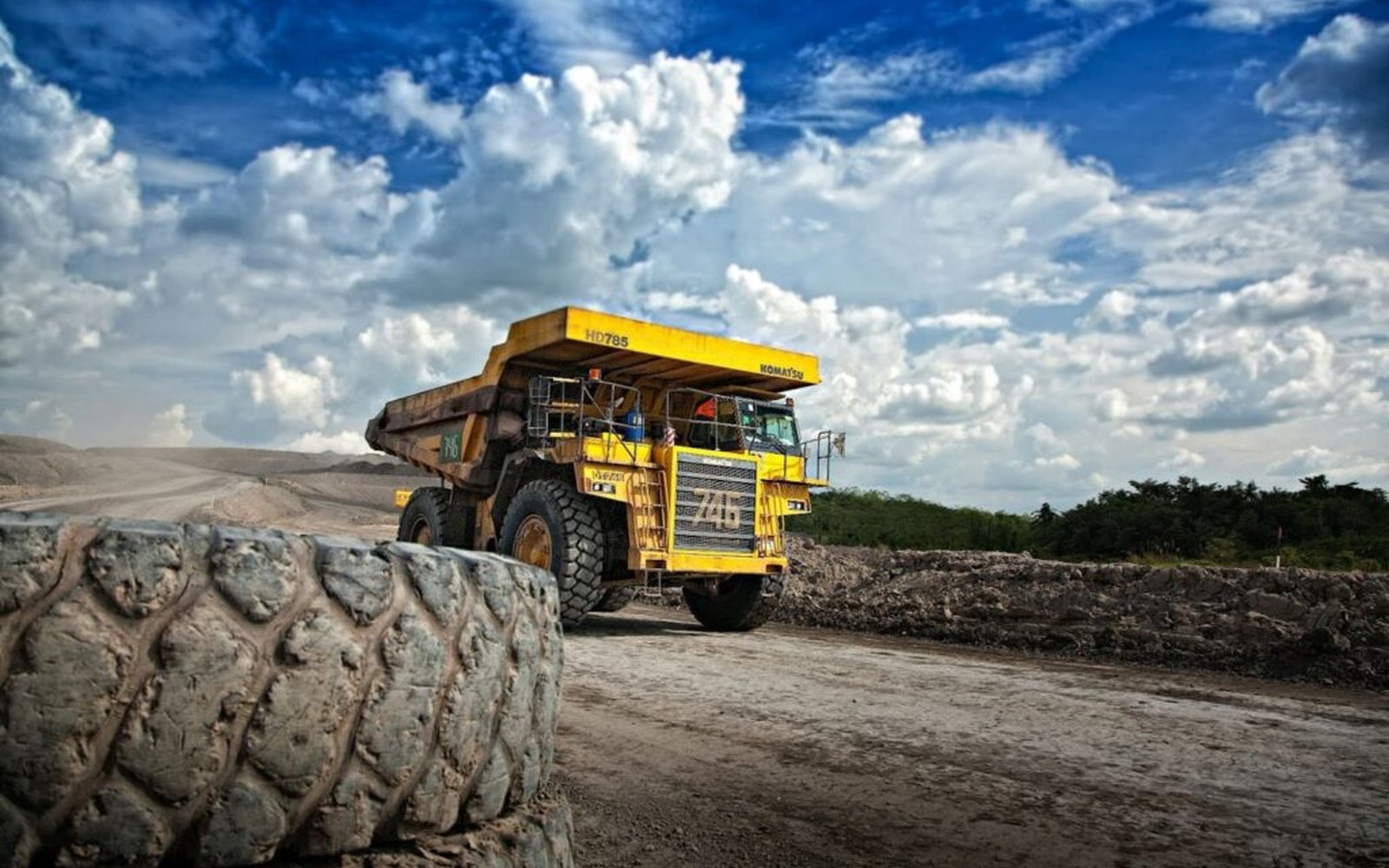
Haulage--Rigid-frame haul trucksare the production spine of an open-pit operation. Matching truck fleet size to shovel output without over-trucking (idle truck time) or under-trucking (shovel wait time) is the core fleet optimization problem. Komatsu 930E trucks carry 320 tons and are among the most widely used in North American pit mining; the Cat 793 at 240 tons is equally widespread at mid-scale operations.
Drilling--Blasthole drillsadvance through the bench pattern ahead of the blast cycle. Drill hole diameter determines explosive loading and fragmentation size, which in turn affects crusher throughput. Getting the blast right means the primary crusher is not choked on boulders.
Support fleet--Track dozers,motor graders, andwater trucksmaintain haul roads, control dust, and manage the pit floor. Their cost per ton contribution is indirect but the impact of neglecting haul road maintenance -- in tire wear and cycle time degradation -- is measurable and significant.
Financing Terms for Open-Pit Equipment
Open-pit mining equipment financing terms reflect the asset's expected service life and the borrower's production economics. A large haul truck with 20,000 to 30,000 hours in its design life can support a five- to seven-year finance term even when acquired as a used machine with significant hours already on it, provided the remaining service life is well-documented. A rebuilt truck with a new powertrain may have a service life expectation that supports terms comparable to a new machine.
For new equipment, the standard term range is 60 to 84 months. For used equipment, terms are shorter as the machine's remaining life decreases. Application-only transactions close faster and with less documentation; full-document underwrites provide more flexibility on term length and structure when the transaction size warrants it.
TRAC leases(Terminal Rental Adjustment Clause) are a structure used frequently for large haul trucks and other mobile mining equipment when the operator wants operating lease treatment with flexibility on the residual value at end of term. The lessee and lessor agree on a residual at origination; at end of term, if the machine sells for more, the lessee captures the upside, and if it sells for less, the lessee pays the difference. This aligns incentives around maintaining the equipment's value.
Operators Who Qualify
Established mining companies with operating pits are the most straightforward to finance. Contract miners who provide services to pit operators and own their own iron also qualify, as do junior producers bringing new pits into production with a permitted site and funded development plan. Equipment dealers who source machines from auctions and closing mines and resell to operating pits sometimes need bridge financing for inventory.
Credit requirements are flexible.Operators with credit challengesstemming from commodity price cycles, prior restructurings, or thin credit history can still access financing when the machine's collateral value is strong and the production context supports the payment. We consider the whole picture: credit, equipment quality, production, and the operator's demonstrated ability to run the iron.
Get Your Open-Pit Equipment Financed
Tell us what you are buying or refinancing, the machine's condition, and the amount you need. We will respond within 24 hours. Minimum transaction $50,000.