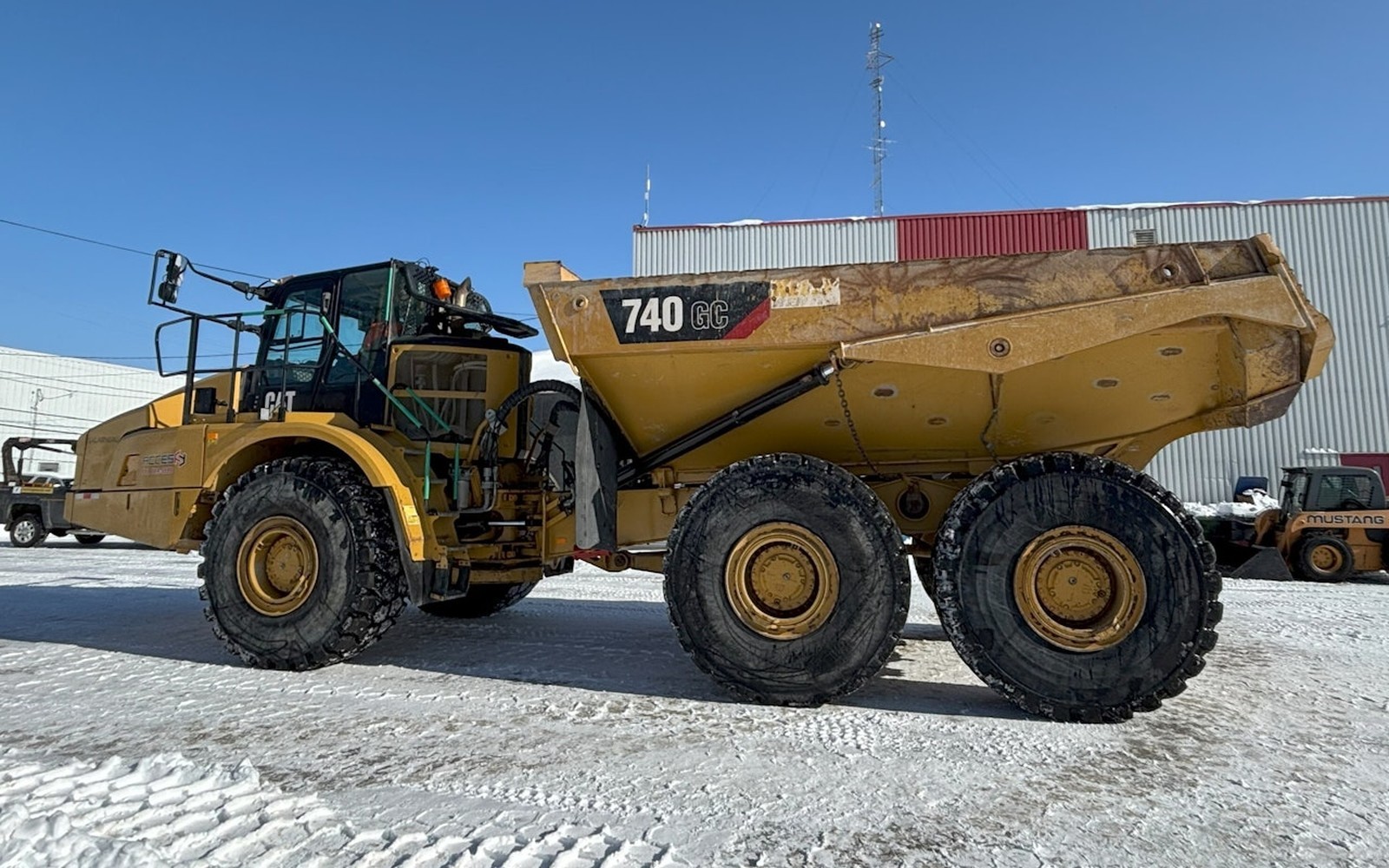
Finance a new or used Cat 793 haul truck. We work with purchase, refinance, and sale-leaseback structures for this 240-ton class rigid-frame truck. Get a quote in 24 hours.
Tonnage targets do not negotiate. When a mine plan calls for 240-ton class haulage, the Caterpillar 793 is one of the machines that satisfies that spec, and operators who run it know exactly what they are getting: a rigid-frame truck with a proven duty cycle across copper, gold, coal, and iron ore pits on every continent. At that production rate, a single truck sitting idle for want of financing kills shift targets in ways that ripple across the entire operation. We finance Cat 793 trucks, new from authorized dealers and used from mine dispersals and auctions, and we structure transactions to match how mining cash flows actually work.
Our minimum deal is $50,000, but a Cat 793 routinely prices well above that threshold. The sweet spot of our portfolio sits in the $100,000-to-$2 million range per unit, and we have lender relationships that go higher for strong credits. We consider B and C credit histories alongside the asset and the operation. Funding from approval to wire typically runs one to two weeks. If you are acquiring a truck, refinancing one already in your fleet, or need to pull equity out of paid-off iron through a sale-leaseback, we can structure all three.
The Cat 793: What Lenders Need to Know About This Asset
The 793 family has been in continuous production since the mid-1990s, and the current 793F variant carries a nominal payload rating in the 240-ton range, though actual payload management varies by site. The machine runs a Cat diesel engine producing roughly 2,650 to 2,750 horsepower depending on configuration, paired with a mechanical drivetrain (as opposed to the electric-drive architecture of the 794 AC). That mechanical drive makes it familiar to rebuild shops worldwide and keeps parts sourcing relatively broad compared to newer electric-drive alternatives.
For lenders, the 793 is a mature asset with strong residual value data. Rebuild history matters: a truck with documented mid-life rebuilds (engine, transmission, suspension, and final drives) carries a meaningfully different risk profile than one with ambiguous maintenance records. We work with lenders who understand the difference between a 793 that has been properly maintained through a major component exchange program and one that has deferred maintenance stacked against it. We ask for service records and use them to position the deal correctly from the start.
Tires represent a significant operating cost on a 793. A set of 40.00R57 tires for this truck class can run into six figures. Some financing structures can incorporate tire lifecycle costs into the payment plan. Ask us about that when you start the conversation.
Who Finances a Cat 793
Contract miners taking on a new surface pit or expanding fleet capacity to meet a production contract represent a significant share of who we talk to. Acontract mining operationoften needs to put iron to work before the first royalty check arrives, and financing bridges that gap cleanly.
Owner-operators who have been running a 793 under a financial arrangement and want to refinance into better terms as their credit situation has improved are another common situation. We can refinance existing equipment loans or leases, often releasing cash flow that improves quarterly liquidity.
Copper and gold miners inElko, NVandGlobe, AZare geographic concentrations we see regularly, given the open-pit copper and gold operations active in those regions. The 793 is a standard tool at many of those operations. We are also active with producers in the Iron Range of Minnesota and in the coal country of Wyoming and West Virginia.
New Cat 793 vs. Used: How the Financing Differs
A new 793F purchased through a Cat dealer comes with a full warranty package and typically qualifies for the most favorable financing terms we can source. Lenders like new assets because there is no maintenance history risk to underwrite. The tradeoff is acquisition cost: a new 793F is a multi-million dollar purchase, and the financing needs to reflect a multi-year amortization schedule that keeps payments manageable relative to production revenue.
Used 793s come from mine dispersals when operations change ownership or close, from auction houses like Ritchie Bros., and from fleet rotations at major producers who cycle equipment on defined schedules. A well-documented used truck at 60-70% of new acquisition cost can represent strong value, particularly when the mine plan has a defined end date that does not justify new-unit depreciation. We finance used 793s regularly through ourused mining equipment financingprogram, and lenders evaluate them on age, hours, rebuild status, and condition reports.
One structural note: used equipment on a sale-leaseback, where the mine already owns the truck outright, can unlock significant liquidity. That equity can then fund pit development, drilling programs, or fleet additions elsewhere in the operation.
How the Process Works
We start with your application and three months of bank statements. For deals up to roughly $400,000, that is often all the documentation needed to generate a term sheet. Above that threshold, lenders typically want business financials for the past two years, a schedule of existing equipment and their current obligations, and sometimes a brief on the mine or contract. We gather what is needed and present the deal in the best light with the right lender relationships.
A realistic timeline from initial contact to funding is one to two weeks for straightforward credits and standard assets. Complex deals with unusual asset conditions, layered ownership structures, or challenged credit can take longer, but we work transparently on timeline from the first conversation. We do not quote timelines we cannot support.
For operators pursuingfinancing with no money down, we have lender relationships that accommodate that structure for well-qualified credits on strong assets like the 793. Discuss that up front so we set expectations correctly.