Finance cone crushers for secondary and tertiary crushing in mining and aggregate operations. Metso HP, Sandvik, and more. Quotes within 24 hours.
Secondary and tertiary crushing product size determines what the mill or the stockpile can work with. A cone crusher running a tight closed side setting in a tertiary position produces the final aggregate specification or the ROM feed size that the ball mill is designed to receive. If that cone is unavailable or if its liner wear is being deferred, everything upstream is producing material that cannot be finished and everything downstream is starved of properly sized feed. Cone availability matters at every point in the crushing circuit where it sits.
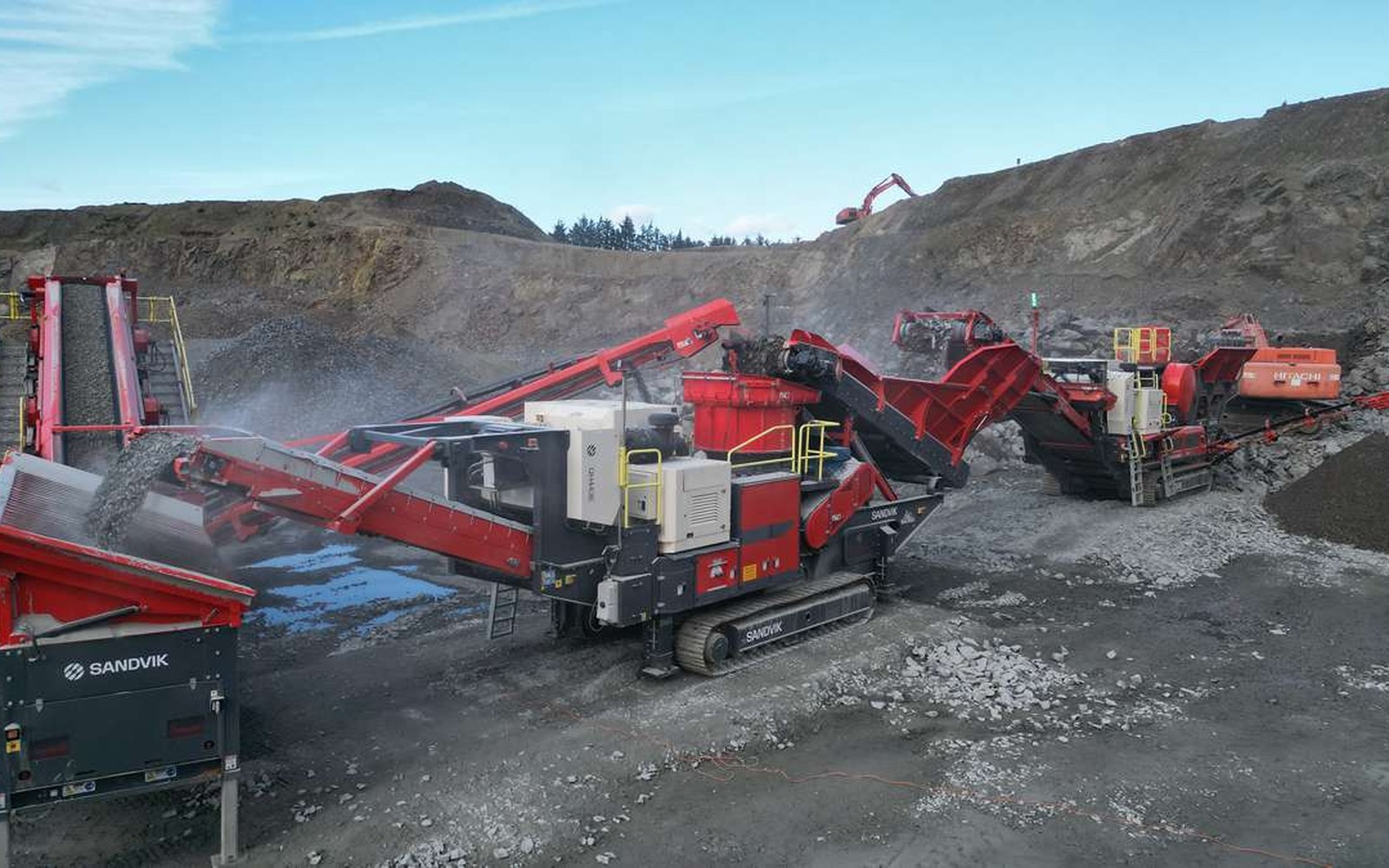
We finance cone crushers for mining processing circuits, aggregate and quarry operations, and portable crushing applications. The market spans a wide range: a mid-size Metso HP300 or Sandvik CS430 in secondary position at a gold mine in Nevada, a large Metso HP500 at the secondary stage of a copper concentrator in Arizona, or a track-mounted Sandvik QS440 portable cone plant working aggregate contracts in the Mountain West. Different machines, different applications, same financing process.
Our minimum is $50,000. Cone crusher transactions typically range from $100,000 on small used secondary units to $3 million or more on large new stationary units installed as major circuit components. We handle the full range, with application-only processing up to approximately $400,000 and documentation-supported underwriting above that.
Cone Crusher Technology and Selection
Cone crushers operate on a gyrating principle: an inner cone (head) gyrates eccentrically within an outer bowl (concave), applying compressive force to rock as it moves through the crushing chamber. The key parameters are the head diameter, the eccentric throw, the chamber configuration (coarse, medium, fine, or extra-fine liners), and the closed side setting. These parameters define what feed size the machine accepts and what product size it delivers at what throughput rate.
The Metso HP series is one of the most widely recognized cone crusher lines in hard rock mining. The HP300 processes 110 to 480 tonnes per hour depending on application; the HP500 handles up to 820 tonnes per hour at the appropriate setting. Sandvik's CH series competes in the same range. These machines are the standard secondary and tertiary crushers in most hard rock ore processing plants built in the last 30 years, and their parts supply and rebuild economics are well established. Older MP series cones from Metso, previously manufactured under the Nordberg brand, are still in widespread operation and remain financeable with appropriate condition documentation.
Portable cone crusher plants, typically mounted on wheeled or track-mounted frames with integral screening and product conveyors, serve the contractor and quarry market where mobility between sites has value. The Sandvik QS440 track-mounted cone plant and the Metso Lokotrack LT200HP are examples in this category. These machines retain strong residual values because of their flexibility and are among the better performing assets from a lender residual value perspective.
Where Cone Crushers Move
Secondary market activity for cone crushers is driven by mine processing expansions, circuit upgrades that replace older machines with larger or more efficient models, and mine closures. The secondary market for HP and CH series cones is reasonably liquid; dealers who specialize in processing equipment maintain active inventories and can locate specific models and sizes for buyers who are not willing to wait for new deliveries.
Liner wear is the dominant operating cost in cone crusher operation and the most important inspection item on a used machine. A cone whose liners are within 50 percent of wear life, whose main shaft and eccentric assembly show no structural issues on inspection, and whose lube and hydraulic systems are functional represents a sound acquisition. We look at inspection documentation on used cones, and buyers who can provide a recent OEM dealer inspection report move through our process faster than those who cannot.
Foraggregate operationstied to specific product specifications, the cone crusher's ability to consistently produce within gradation limits is the operational measure. An operation that runs certification-grade material for highway specification aggregate cannot afford a cone whose product variability drifts out of specification during liner transition. New machines with automation that adjusts CSS to compensate for liner wear address that variability but carry the capital premium that automation always commands.
Refinancing and Sale-Leaseback on Cone Crushers
Cone crushers installed as permanent circuit components accumulate equity over time, particularly when the machine has been maintained and the circuit around it has expanded in value. A sale-leaseback on a stationary cone that is embedded in a processing plant structure can be structured as either a pure equipment financing based on the machine's stand-alone value or as part of a broader processing plant facility.
Operations that financed a cone crusher several years ago at higher interest rates, or on terms that are now creating cash flow strain, can refinance through ourequipment refinancingprogram. If there is equity in the machine beyond the current loan balance, acash-out refinancecan return that equity as working capital while reducing the monthly payment on the remaining obligation.
For portable cone crusher plants where the owner wants to upgrade to a newer or larger model, a sale-leaseback on the existing machine can fund the down payment on the replacement. This rolling equity approach lets a contractor stay current with the fleet without drawing on operating cash flow for each equipment transition.
Related Equipment Financing
Cone crushers sit in the middle of crushing circuits. Thejaw crusherfeeding the secondary cone determines the maximum feed size the cone receives; thevibrating screensafter the cone determine whether oversize material is recirculated or finished product is classified. All three work together, and when a circuit is being expanded or rebuilt, financing the entire plant upgrade as a single transaction simplifies the process and may improve terms.
Buyers specifically looking at brand-name cone crushers will find dedicated financing pages for theMetso HP500and other major production units. If you know the specific model you are after, those pages cover that machine's specs and deal structure in more detail.