Finance articulated dump trucks for mining, quarry, and civil operations. 40-ton to 60-ton class, new or used, B/C credit considered. Quotes in 24 hours.
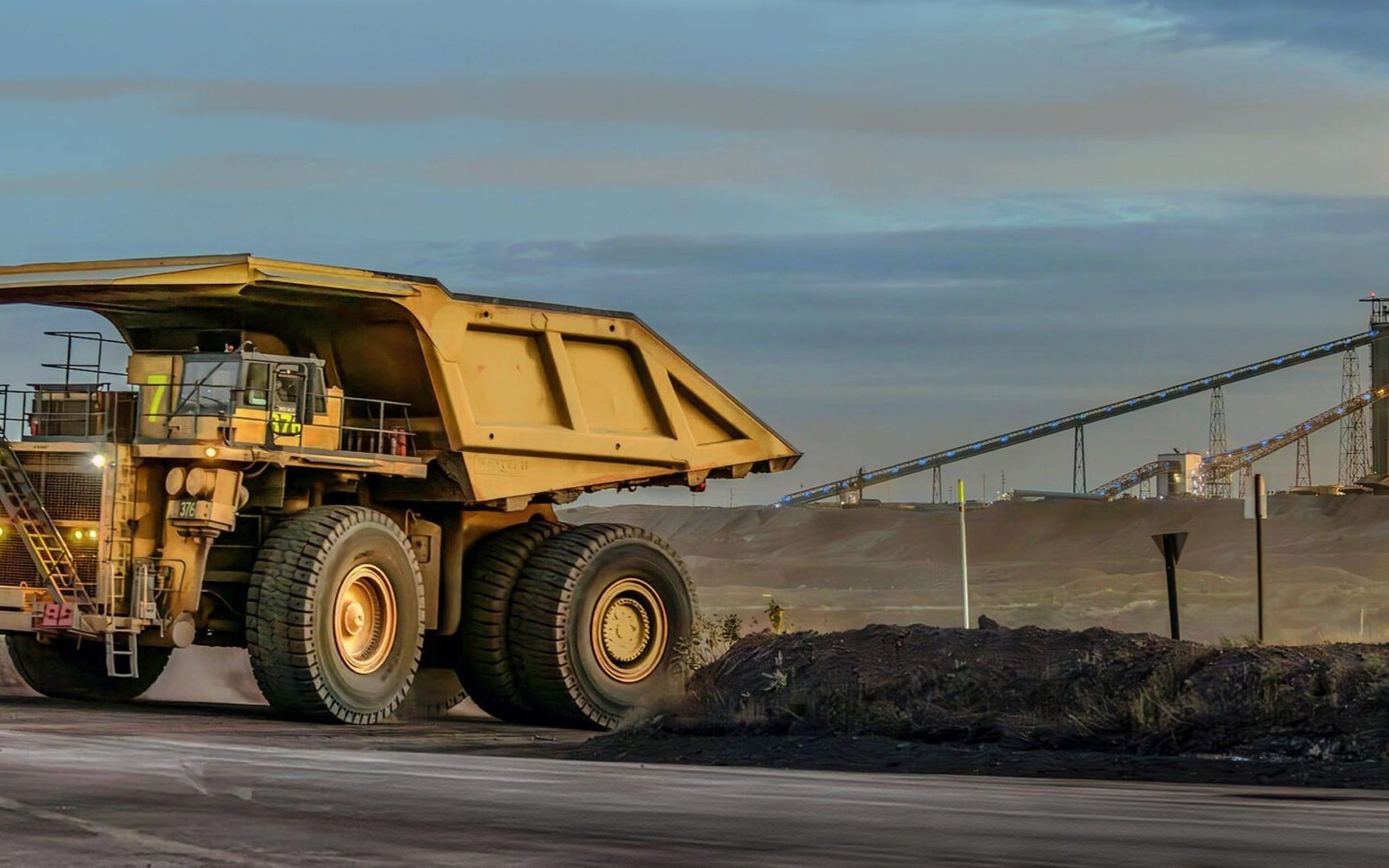
Soft underfoot, tight haul roads, and steep grades in remote terrain: these are the conditions where articulated dump trucks earn their keep. An ADT's pivoting frame distributes load across six driven wheels, holds traction where a rigid-frame truck would break loose, and negotiates curves that no fixed-chassis unit could manage. At operations where the haul road conditions rule out rigid-frame trucks, ADTs are not a fallback option. They are the only viable solution.
Financing articulated dump trucks carries its own logic, distinct from both rigid-frame haul truck financing and standard construction equipment deals. The payload class is narrower, typically 30 to 60 metric tons, which means most transactions fall running about $300k to $900k for newer used units, and $500,000 to over $1 million for current-model machines like the Volvo A60H. The applications range from mine haul and overburden stripping to civil construction, quarry development, and infrastructure projects in remote locations where road quality cannot be assumed.
We finance articulated dump trucks from $50,000 up, for buyers acquiring new units from dealers, used units through auction or private sale, and for mine operators looking to refinance or pull equity out of ADTs already in the fleet. B and C credit situations are something we look at carefully rather than decline by default. The asset, the operational history, and the contract or revenue backdrop matter as much as the credit score.
Applications That Drive ADT Demand
Civil construction on remote highway, pipeline, and dam projects generates consistent demand for articulated haulers because the haul roads on these jobs are provisional at best. The machine needs to move material the day it arrives, regardless of whether the road is groomed or soft. ADTs handle that duty in a way that protects cycle times and reduces breakdowns.
Quarry and aggregate operations use ADTs for pit development and overburden removal, particularly during the early phases of a new pit when the haul roads are still being constructed. A quarry in the Southeast cutting into a new bench often runs articulated trucks for the first year or two before the haul roads are graded well enough for rigid-frame equipment.
Small-to-mid-scale mining operations, particularly in gold and aggregate extraction, run ADTs because the scale does not justify the capital and infrastructure required for ultra-class rigid-frame equipment. A 45-ton ADT can feed a crusher at a small gold operation efficiently without requiring the same haul road standards as a 150-ton rigid truck.
Contract miners working atcontract mining operationsoften spec ADTs because the fleet needs to adapt to different site conditions across multiple clients. A fleet that can handle varied terrain gives the contractor more bidding flexibility than one designed for rigid-frame equipment that demands prepared roads.
ADT Pricing and Financing Structures
Current-generation ADTs in the 40-ton to 60-ton class, including models like theVolvo A60H, Bell B60E, and Caterpillar 745, carry new prices typically in the $600,000 to $1.1 million range depending on configuration and spec. Smaller models in the 30-ton to 40-ton class run lower, often $350,000 to $600,000 new.
The used market for ADTs is active. Well-maintained units with reasonable hours trade at significant discounts to new, and there are often good buying opportunities coming out of civil construction project completions. A 45-ton ADT with 8,000 to 10,000 hours that has been maintained to schedule can represent strong value for a mining or quarry operation that can keep it busy.
Terms on ADT financing typically run three to six years, weighted toward the machine's age, hours, and condition. Application-only approval up to roughly $400,000 is available for qualifying transactions, which covers a significant portion of used ADT purchases. Larger transactions need three months of bank statements and basic business documentation. Most deals fund within one to two weeks of complete paperwork.
Sale-leaseback is an option if you have ADTs with remaining value and a need for operating capital. A fleet of three or four paid-off ADTs can generate meaningful liquidity while the machines keep working.
Buying New vs. Used ADTs
New ADTs come with OEM warranty, current emissions compliance, and the predictability of a known maintenance baseline. For operations with multi-year production contracts that require reliable fleet availability, new equipment can be the right call even at the higher price. We finance new ADTs from dealer invoices with terms that fit the machine's full useful life.
Used ADTs from reputable auction houses and equipment dealers represent strong value at the right price. The key variables are hours, maintenance records, and the condition of the differential locks, transmission, and frame joint. An ADT's articulation point sees tremendous stress, and a frame joint in poor condition is a near-term cost that needs to factor into the advance. We want to see maintenance records and, on high-hour units, an inspection report that addresses these specific components.
We coverused mining equipment financingexplicitly and can work from auction purchase confirmations, dealer invoices, or private-party bills of sale. The documentation path varies but the credit review is consistent.
Where ADTs Move in Mining Geographies
ADTs are particularly common in gold mining regions with complex terrain. In Alaska, where road construction to remote deposits is rarely practical, articulated haulers are often the only viable surface transport for near-mine stripping. Operations aroundFairbanks, Alaskahave run ADTs extensively for this reason.
Aggregate and quarry operations throughout the Southeast and Mid-Atlantic states that work in clay-heavy terrain rely on ADTs for the traction advantage. Soft ground in North Carolina or Georgia can make a rigid-frame truck unusable in wet weather, while an ADT keeps cycling.
Infrastructure and civil construction projects associated with mine development, such as access road construction and tailings impoundment development, also drive ADT demand in mining regions across Nevada, Wyoming, and Montana. These contracts are often the first step for a contractor looking to build relationships with mine operators.