Finance new or used motor graders for haul road maintenance and mine site grading. application-only programs reaching $400k. B/C credit considered. Quotes in 24 hours.
Haul road condition determines cycle time. A motor grader that keeps the grade smooth and the drainage channels clear is the difference between a Cat 793 running at designed speed and one crawling through corrugation, burning tire life and burning hours. Tonnage moved per shift depends on that road, and the road depends on a grader in constant rotation.
We finance motor graders for surface mines, open-pit operations, aggregate quarries, and mine site construction contractors. Whether you are adding capacity to asurface mining operationthat expanded its haul road network or replacing an aging unit that has passed its economic rebuild threshold, we structure the deal around the duty cycle, not a bank's box-checking exercise.
Our minimum is $50,000. The sweet spot for most motor grader transactions is $100,000 to $500,000, covering everything from a solid used Caterpillar 24M to a new Komatsu GD825 with grade control. Application-only up to approximately $400,000, funded in roughly one to two weeks from approval.
What You Are Actually Buying
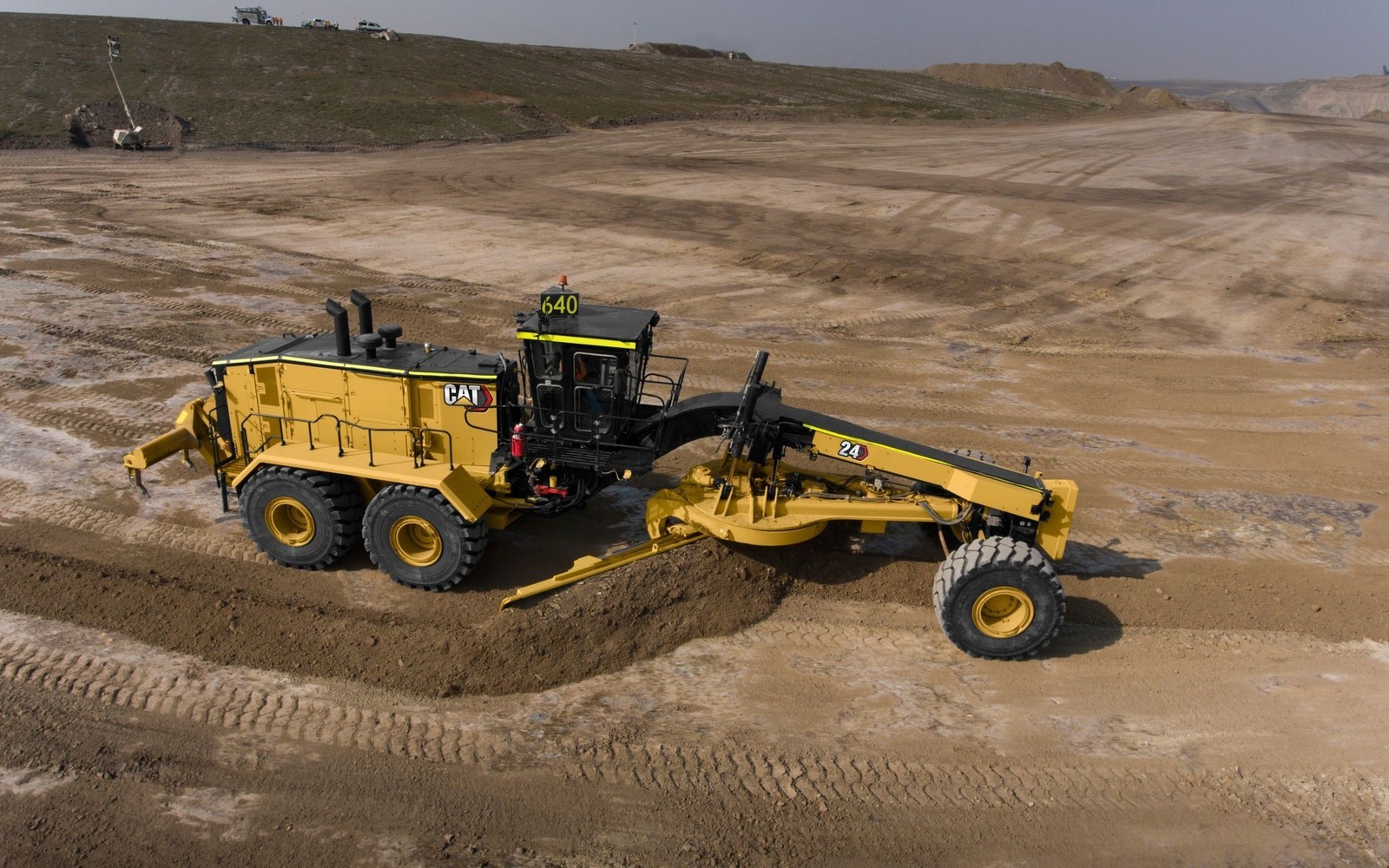
Motor graders used in mining service differ from highway graders in blade width, frame rigidity, and horsepower. A machine like the Caterpillar 24M carries a 24-foot moldboard and puts over 500 horsepower to work; its operating weight runs above 62,000 kilograms. The Komatsu GD825 competes in the same class, and both are built to handle the abrasive material conditions common in hard rock and coal haul road applications.
Smaller operations run mid-size machines in the 200 to 300 horsepower range, such as the Caterpillar 140M series or John Deere's 872G, which handle secondary haul roads and pit floor cleanup. These sit in the $250,000 to $450,000 new range and remain popular as used units because their rebuild economics are well understood by most mine maintenance departments.
Grade control integration has become standard on newer machines. Systems like Cat GRADE with Advanced Compaction or Komatsu's intelligent Machine Control allow single-pass grading with tighter tolerances, reducing passes and fuel burn. A grader with factory-integrated grade control carries a higher sticker price but lowers operating cost per mile of maintained road, which matters to any mine site running multiple haul road circuits. We finance the machine and the onboard technology together as one asset.
Who Finances Motor Graders Through Us
The buyers we see most often fall into a few recognizable groups. First are mine operators who run their own haul road maintenance fleet alongside production equipment. A pit producing several million tons per year often keeps two or three graders in rotation, and when one reaches rebuild age, replacing it without disrupting the maintenance schedule requires fast capital. Second are contract mining and civil contractors who are awarded site preparation or infrastructure contracts at new mine developments and need to add grading capacity quickly to perform.
Third are aggregate quarries and crushed stone operations where haul road grading doubles as reclaim road maintenance. Quarry operators servingaggregate marketsoften run motor graders in close coordination with their crushing circuit, and a grader failure that lets the roads deteriorate slows truck cycle time and reduces crusher feed rate. The equipment is part of a system, and financing it as a system makes more sense than treating it as a line item.
We also work with contractors entering thecontract mining segmentwho need to demonstrate fleet capacity when bidding maintenance contracts. Owning the iron versus renting it changes how a contract bid looks and changes the margin on multi-year deals.
New vs. Used Motor Graders
New machines come with full warranty coverage, current emissions compliance, and the option to specify grade control and telematics packages at the factory. Delivery times vary; lead times on large-class machines have historically run long, and buyers who need a unit in the next 30 to 60 days often turn to the used market.
Used motor graders with under 10,000 hours and solid service records represent strong value, particularly machines that have been maintained under a dealer-managed PMQ program where hour-by-hour service history is documented. We finance used machines across the full market, including private party purchases where you have found a unit through an auction, a dealer's used lot, or a direct operator-to-operator sale. Ourused mining equipment financingprogram handles all three channels without requiring a dealer intermediary.
Rebuilt machines, those that have gone through a certified component exchange or full structural rebuild, fall into a different category. We evaluate them on the documentation of what was replaced and what warranty the rebuilder provides. A well-documented rebuild can carry terms similar to a used machine at similar hours, because the residual value story is clear.
How Deals Are Structured
Motor grader financing typically runs on 36 to 84 month terms. Shorter terms mean higher monthly payments but less total interest paid; longer terms lower the monthly exposure and preserve working capital for consumables, tires, and ground engaging tools, which on a large motor grader represent meaningful operating costs in their own right.
For operations that want to keep options open on technology upgrade cycles, a lease structure makes sense. Anequipment leaselets you return the machine at term end rather than carrying residual risk on iron that may be technologically obsolete in seven years as grade automation advances. For operations that plan to run the unit through its full economic life and carry it through one or two major rebuilds, a loan with a dollar-buyout structure gives clean ownership from day one and full equity buildup.
Sale-leaseback is worth noting for operations that bought a grader outright with cash and now want that capital back in circulation. We can appraise the current value, pay that amount to the operation, and hold the machine as collateral under a new lease or loan. The machine stays in the pit; the cash goes back to work.