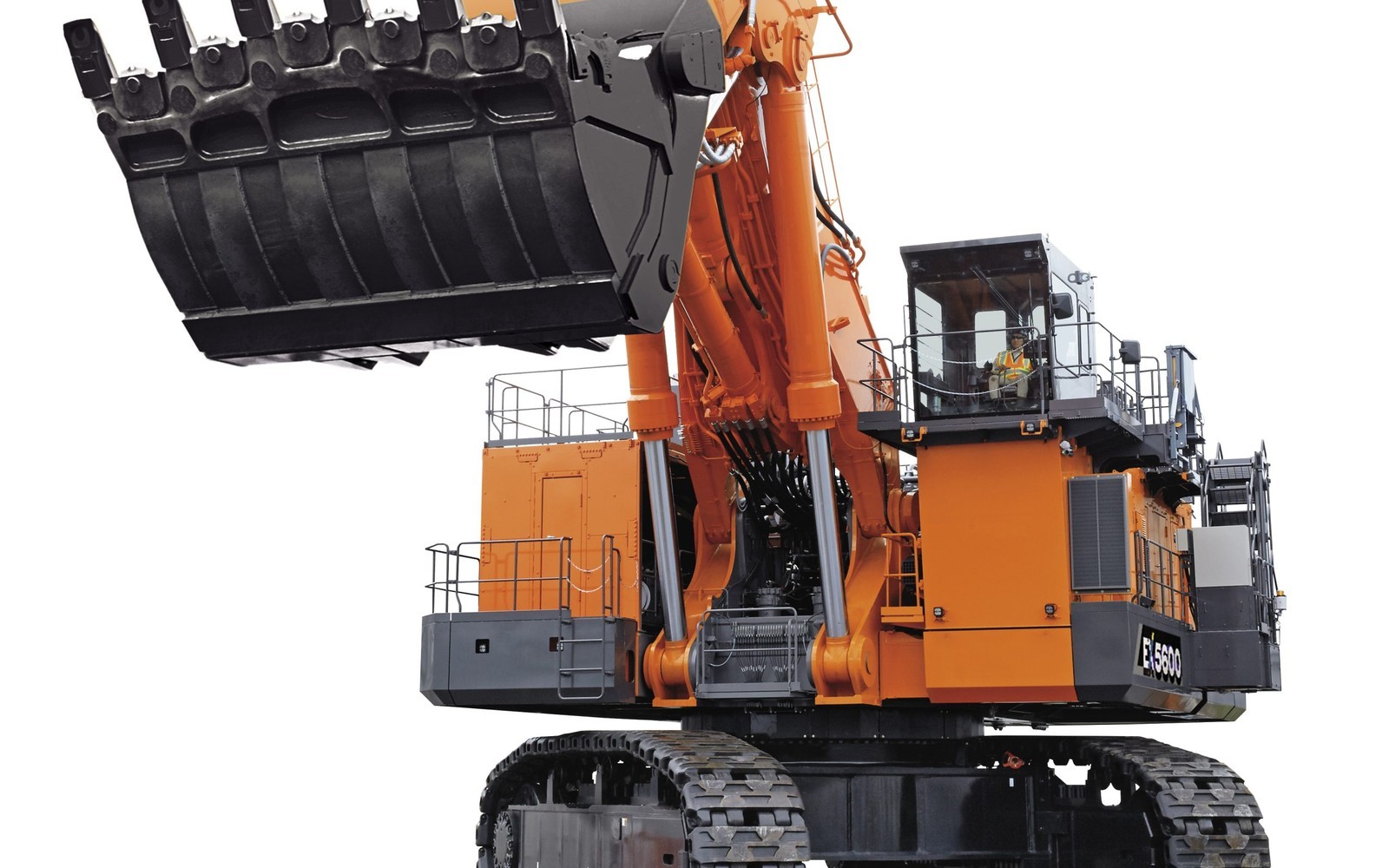
Finance a Hitachi EX8000 ultra-class hydraulic mining excavator. Structured terms for the world's largest shovels. Decisions in days, funding in 1-2 weeks.
The Hitachi EX8000 is among the heaviest hydraulic face shovels in active production, with an operating weight of approximately 802 metric tons and a bucket capacity of 42 to 45 cubic meters. Machines at this scale do not change hands through a dealer's lot. They are commissioned at mine sites, maintained by dedicated crews, and tied to production plans that depend on their availability for years at a time. Financing an EX8000 is a capital-markets level decision, and the lender behind it needs to understand what the asset produces and what it is worth when the ore body or the mine plan changes.
We work with mining companies, contract miners, and operators on EX8000 transactions at every stage of the asset's life, from new unit purchases through mid-life refinancings and end-of-production sale-leasebacks. Our minimum starts at $50,000, but EX8000 deals are structured at a very different scale. Large transactions involve financial documentation including three months of bank statements and financial statements, and funding closes in approximately one to two weeks from a completed application. Our broaderHitachi financingprogram covers the EX8000 and the EX5600 alongside the EH5000 haul truck, so operators running a matched Hitachi fleet can consolidate. Compare specifications across the category on ourhydraulic mining excavator financingpage.
EX8000 Specifications and What They Mean for Financing
The EX8000 runs two Cummins QSK78 engines producing a combined output of approximately 4,400 horsepower. The hydraulic system drives six independent circuits. The face shovel configuration is the primary variant for hard-rock and copper porphyry mining, loading 240-to-300-ton haul trucks in two to three passes. The backhoe configuration is also produced for operations where the excavation geometry favors digging from below bench level.
Component life on the EX8000 is long and the rebuild intervals are predictable, which is a meaningful factor for financing. The swing ring, undercarriage, boom, and stick assemblies are Hitachi's heaviest structural components and are designed to outlast multiple engine and hydraulic pump cycles. Major overhaul costs are significant, and understanding when each component cycle expires is part of accurate total-cost-of-ownership modeling. Lenders who evaluate residual value on an EX8000 without accounting for planned rebuilds will misprice the collateral in both directions.
Hitachi's ConSite monitoring platform provides real-time operational and condition data accessible to both the operator and Hitachi's service network. Fuel consumption, payload per pass, cycle times, and hydraulic temperatures are all tracked. This data is valuable to us as part of the collateral assessment on used units because it provides an objective operational record beyond the service logbook.
Where the EX8000 Operates and Why It Matters
The EX8000 is deployed in the highest-tonnage open-pit mines globally. Domestically, copper porphyry operations in Arizona and Nevada are the primary environments. The Morenci and Sierrita mines in Arizona, Bingham Canyon in Utah, and the Nevada copper operations are the scale at which this machine's output is required. Iron ore operations in Minnesota's Iron Range, including those nearHibbing, MN, have historically run large hydraulic excavators of comparable capacity.
The mine context matters to financing because machine availability and residual value are both tied to the health of the underlying mineral resource. A long-life ore body with decades of mine plan ahead supports a longer-term financing structure than a mine approaching its planned closure date. We factor in the mine-life horizon when structuring terms on transactions where the asset's deployment location is clear.
For operators in copper and gold, the commodity price cycle affects cash flow but does not change the fundamental financing math as long as the mine's cost structure is sound. Ourcopper mining equipment financingandhard rock mining equipment financingpages provide more context on how we approach the credit analysis in those sectors.
What We Need to Structure an EX8000 Transaction
EX8000 transactions at full machine value require meaningful documentation. We need at least three months of business bank statements showing the operation's cash flow, the prior two years of financial statements (or audited financials for larger companies), and a description of the production context, meaning the mine, the ore body, and the contract or ownership structure under which the machine will operate.
For contract mining companies, the underlying mining contract is an important part of the file. We look at the contract term, the payment schedule, the counterparty's credit profile, and any termination provisions that could affect the machine's deployment status. Strong, long-term contracts with creditworthy counterparties improve the deal significantly. Operators with weaker credit profiles can sometimes bridge that gap with a strong contract in hand.
Ourmining equipment loansprogram covers the loan-structure path. Operators who prefer a lease structure, either for balance sheet reasons or for payment flexibility, can go through ourmining equipment leasingprogram. We will walk through the structural differences and help you decide which fits your situation.