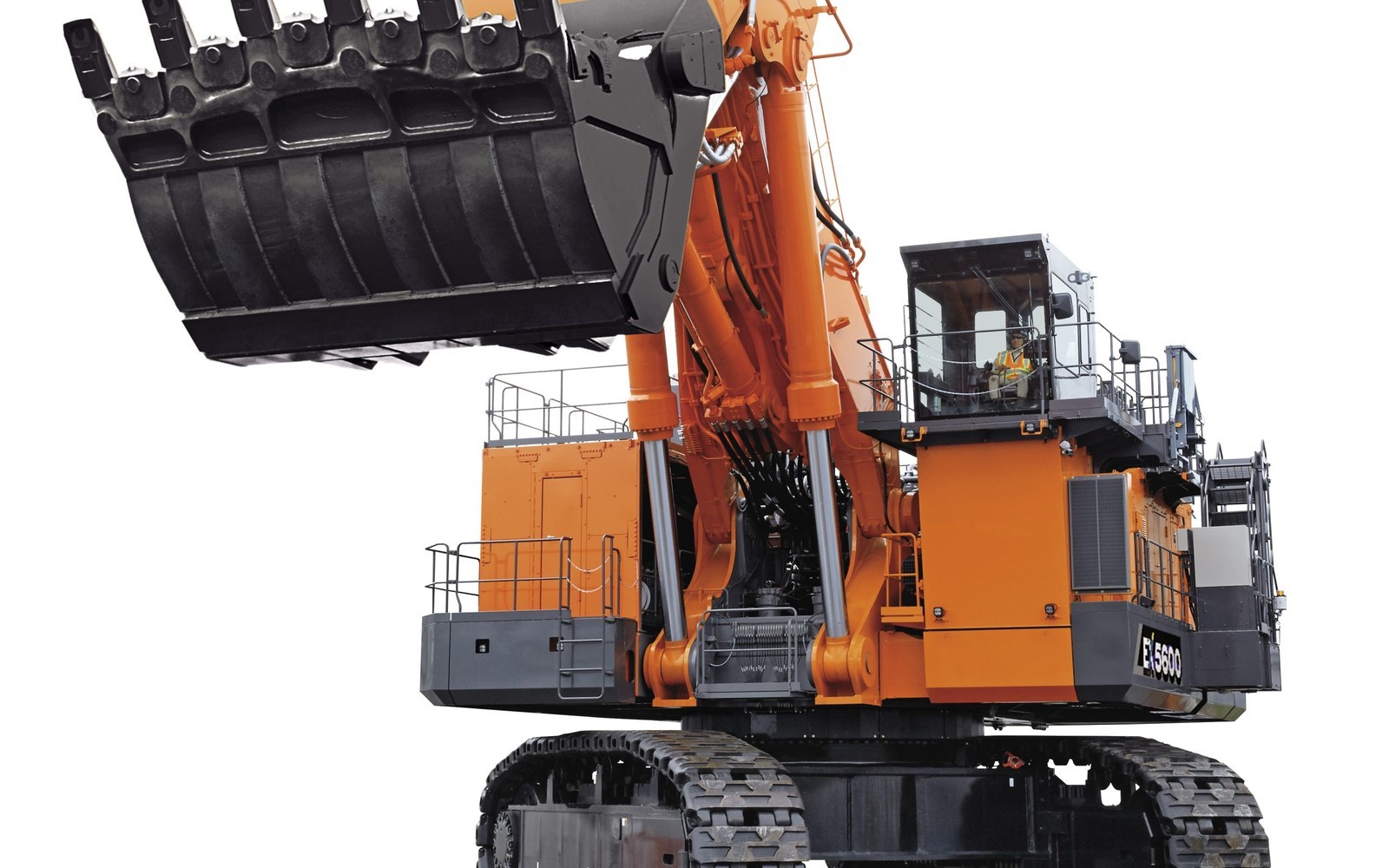
Finance a Liebherr R 9800 hydraulic mining excavator. Structured terms for ultra-class shovels in copper, iron ore, and gold operations. Decisions in days.
Production in a large open-pit mine begins at the face, and at the face the R 9800 is one of the most productive hydraulic mining excavators ever built. With a bucket capacity in the 42 to 47 cubic meter range and an operating weight around 810 metric tons, the machine is purpose-designed for loading 300-ton-class haul trucks in two to three passes. That loading efficiency determines fleet productivity across an entire shift, which means the R 9800's availability is wired directly into the mine's revenue. Capital behind this machine needs to be structured with that production math in mind.
We finance Liebherr R 9800 excavators for mining companies, contract miners, and operators working copper, gold, and iron ore deposits at the scale where this machine makes operational sense. Our minimum is $50,000, though R 9800 transactions are structured at a far larger scale. Deals above $400,000 move through a financial review that involves bank statements and financial documentation, and funding closes in about one to two weeks from a complete application. We work alongside our broaderLiebherr financingprogram, and operators with mixed Liebherr fleets, including T 284 trucks matched to the R 9800, can consolidate through a single relationship. Ourhydraulic mining excavator financingpage covers comparable machines across brands.
R 9800 Specifications and Why They Matter to Lenders
The Liebherr R 9800 is powered by two Cummins QSK78 diesel engines producing a combined output of approximately 4,440 horsepower. The hydraulic system drives four independent pump circuits, allowing the boom, arm, and bucket cylinders to operate simultaneously without competing for flow. This hydraulic architecture is a key reason the machine can maintain short cycle times even with a bucket payload of 45 metric tons.
The structural components, including the swing ring, undercarriage, and boom, are designed for a service life measured in tens of thousands of hours with planned rebuild intervals. Liebherr provides component life guidelines, and operators who follow planned maintenance schedules have data showing that major structural components hold value well past initial financing terms. This durability is one of the reasons R 9800 units hold residual value even with high hours, provided the component maintenance history is documented.
Lenders who have not financed mining-class excavators before sometimes struggle to model residual value on machines with 15,000 or 20,000 hours. We know that major overhauls reset the economic clock on the machine's revenue-generating components, and our underwriting accounts for that. A machine with 18,000 hours and a recent engine and hydraulic pump rebuild is not the same collateral risk as an 18,000-hour machine with deferred maintenance.
New Unit Acquisition and Used Machine Options
A new R 9800 is a substantial capital commitment, priced in the range of several million dollars depending on configuration. Financing a new unit over a long term, typically 60 to 84 months, spreads that investment over the productive life of the machine's warranty period and initial component cycles. For operators with strong credit and stable mine-plan visibility, new unit financing is often the cleanest structure.
Used R 9800 units emerge from the secondary market when mines close, production plans shift, or fleets are rationalized. A well-maintained R 9800 with documented component history and remaining structural life can represent significantly better value per hour of remaining service than a new acquisition, and the financing structure follows the same basic logic: we evaluate the machine's current collateral value against the proposed debt and determine what terms the asset and the borrower can support. Ourused mining equipment financingprogram is designed specifically for situations where the machine's component history is the determining factor, not just the odometer.
Operators who are upgrading from a smaller excavator, such as a Liebherr R 996 or a competitor machine in the 300-ton class, and trading in or selling the existing machine to partially fund the R 9800 acquisition can structure that as a combined transaction. We can work through the arithmetic of trade equity versus down payment versus financed amount to find the structure that preserves the most working capital.
The Mine Operations That Field an R 9800
Ultra-class hydraulic excavators belong to the largest surface mines in production today. Copper porphyry deposits in Arizona, Nevada, and New Mexico, as well as the large iron ore operations in Minnesota's Iron Range, are examples of domestic operations at the scale where an R 9800 can be justified economically. Internationally, the machine is a staple in Australian iron ore and South American copper.
Contract mining companies are a significant portion of the R 9800 market. These firms acquire machines as fleet investments tied to long-term mining contracts with producers who do not want the capital on their own balance sheet. For a contractor financing an R 9800 against a five-year mining contract, the contract term, the counterparty's credit quality, and the mine-life horizon all figure into how we structure the deal.
Operators in copper-producing regions of Arizona, including the Safford and Globe corridors, and in the Iron Range cities ofHibbing, MNandVirginia, MN, are representative of the domestic customer base for machines at this scale. Ourcopper mining equipment financingprogram and ouriron ore mining equipment financingcoverage provide Diligence Notes for operators in those sectors.
Get R 9800 Financing Terms
This is a significant capital commitment and it deserves a lender who understands what the machine does. Reach out with the machine details, your operation, and what you need the financing to accomplish. We will respond with a real structure.