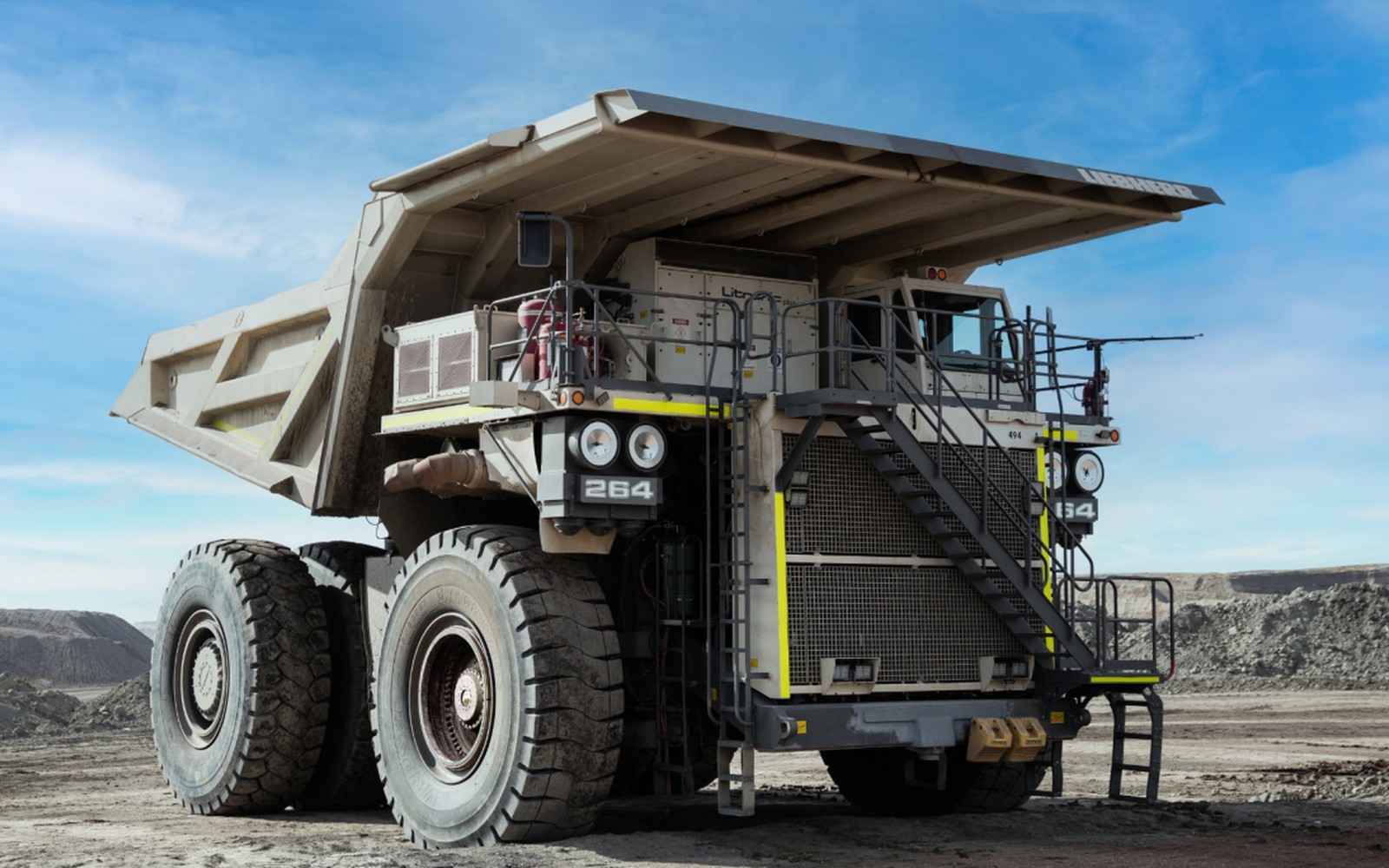
Finance a Liebherr T 264 rigid haul truck with terms designed for pit production cycles. application-only programs reaching $400k, B/C credit considered, decisions in days.
Every ton in the haul truck is production. The Liebherr T 264 carries a nominal payload of 240 metric tons, which places it firmly among the large-class rigid-frame haul trucks used in the world's highest-tonnage copper, gold, and iron ore mines. Availability on that truck is what determines whether the shovel or loader it serves can maintain its own production numbers. Financing the T 264 should reflect that reality: terms that respect multi-shift operations, underwriting that accounts for asset values in the eight-figure range at new, and a lender who has seen mining-class iron before.
We finance Liebherr T 264 trucks, including new units and used machines with documented service histories. Our minimum is $50,000, and T 264 transactions sit well above that floor. Application-only approval is available up to approximately $400,000, and deals above that threshold move through a financial review that does not require months of back-and-forth. Funding closes in roughly one to two weeks once the application is complete. TheLiebherr financingprogram covers the full Liebherr mining line, including the larger T 284, so mixed-fleet Liebherr operators can often handle multiple units through a single relationship. We also work withrigid-frame haul truck financingacross all major brands for operators running mixed fleets.
T 264 Specifications and Operational Profile
The Liebherr T 264 uses a diesel-electric drive system. The MTU Detroit Diesel 20V4000 engine produces approximately 2,722 horsepower and drives AC electric motors at each rear wheel. This diesel-electric configuration eliminates the traditional mechanical transmission and torque converter, reducing powertrain maintenance complexity and improving energy efficiency under load. Trolley-assist compatibility is available on some configurations, allowing the truck to draw power from overhead lines on steep ramp grades and reduce diesel consumption significantly on those segments.
Payload capacity of 240 metric tons is matched to large hydraulic face shovels and cable shovels loading in three to four passes. The machine's rated speed on grade and its fuel burn per ton-mile are the two numbers that determine true fleet economics, and the T 264's diesel-electric system is designed to perform favorably on both metrics compared to mechanical-drive competitors in the same class. Liebherr's LiDAT telematics system provides operational data including payload per cycle, fuel consumption, and component health monitoring.
Tires are a major cost consideration on any large haul truck. The T 264 runs 53.5/85 R57 class tires, which carry substantial replacement costs. Tire management programs and the machine's electronic load-sensing system help extend tire life by flagging overload conditions before they cause structural damage. Used units with good tire health documentation are more attractive collateral than machines with worn or damaged rubber that will require immediate replacement.
Operations That Run the T 264
Large open-pit copper mines in the Americas and Africa have historically been the primary market for 240-ton-class haul trucks. Iron ore operations in Australia and Brazil, and gold mines running ore bodies that justify the large truck economics, are also significant users. Contract mining companies that provide turnkey fleet services to mine owners acquire these machines in quantity to staff new contracts.
For owner-operators in the western United States, Nevada and Arizona copper operations regularly use 240-ton-class trucks. Operators in the Powder River Basin coal fields have run large trucks in comparable payload ranges, though the haul distances and road conditions in coal are distinct from the typical open-pit metal mine profile. If you are inElko, NVor the broader Nevada gold district, or working copper in the Globe and Safford corridor in Arizona, we have financed trucks serving those operations before.
The key financial question for any large haul truck purchase is whether the production plan supports the debt service. A T 264 running 5,000 hours per year at a fully loaded mine site generates a very different cash flow picture than one running 2,000 hours per year at a smaller operation. We look at the production context and the contract structure, not just the balance sheet, when structuring large transactions.
Credit and Documentation Requirements
The documentation path depends on deal size and credit profile. For transactions up to approximately $400,000, an application with basic business information is often enough to receive a quote. Larger transactions, which most T 264 financings will be, require three months of business bank statements and financial statements at a minimum. For very large deals, we may ask for a current-year interim financial statement and the prior two years of tax returns or audited financials.
Credit profile matters but is not the only factor. We consider B and C credit profiles alongside clean credits. What we look at in addition to the credit score is the strength of the operation: revenue trends, contract backlog, mine-plan visibility, and management experience. A mining operator with a bumpy credit history but a solid three-year mine contract and a known ore body is a different risk than a speculative startup with the same credit score. Ourbad credit equipment financingprogram is a real path, not a footnote.
Startups and new mining ventures can also apply through ourstartup mining business financingprogram, which has additional requirements around collateral and personal guarantees but is not automatically off the table for a first-time mining operator with a clear business case.
You may also want to reviewDoosan (Develon) Financing, andCASE Financing.