Finance underground drill jumbos for development headings, raise drilling, and stope preparation. Sandvik, Epiroc, and Atlas Copco. Quotes within 24 hours.
Development rate sets the pace of an underground mine. Every meter of heading advanced is a meter closer to ore, and the development jumbo is the tool that drives that advance. A two-boom jumbo working a 5 by 5 meter face can cycle a round in a shift cycle; a single-boom unit on a smaller development heading moves slower but costs less to own and operate. The machine you need depends on the heading dimensions, the rock conditions, and how fast your mine plan requires development to advance.
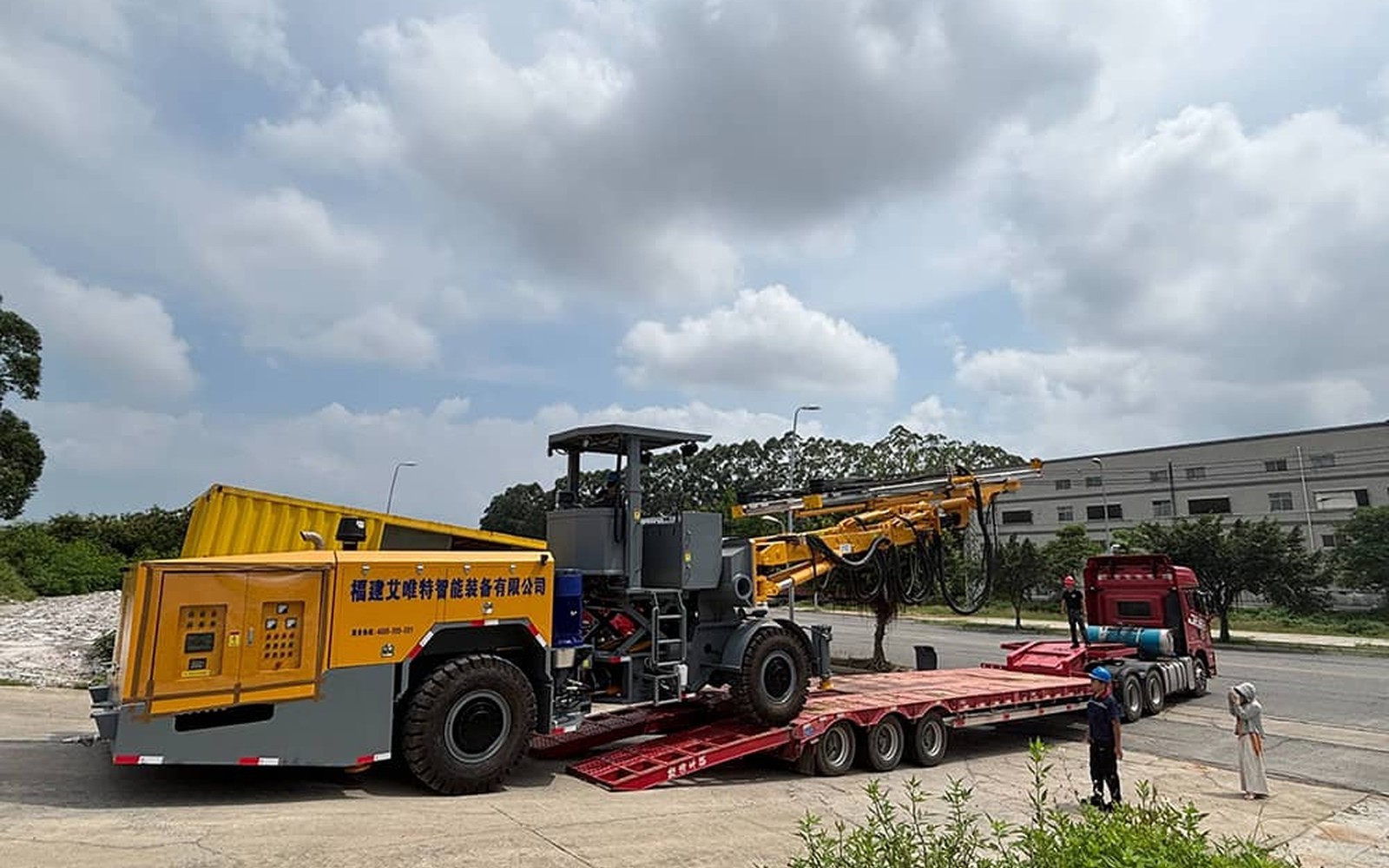
We finance underground drill jumbos for hard rock mining development, for raise drilling contractor setups, and for the transition from shaft or decline access into production-level drilling. The machines span a range from compact single-boom electric jumbos built for narrow-vein development to large twin-boom units capable of drilling full-face rounds in civil tunneling dimensions. Sandvik and Epiroc dominate this market, with models like the Sandvik DD422i and the Epiroc Boomer M2 C among the most widely used in active underground mines.
Our minimum is $50,000. Most underground jumbo transactions fall between $400,000 and $2.5 million depending on the boom configuration, the automation package, and whether the machine is new or certified used from the OEM's refurbishment program.
Single-Boom vs. Twin-Boom and Automation
Single-boom drill jumbos handle smaller development headings and narrow-vein stoping where the entry dimensions do not justify the width of a twin-boom machine. They are lighter, more maneuverable in tight drifts, and cost less to purchase and maintain. A small underground operation running headings in the 3.5 by 3.5 meter range may run single-boom units exclusively and achieve adequate development rates without the capital outlay of a larger machine.
Twin-boom jumbos are the workhorse of medium to large underground development. The Sandvik DD422i is a widely recognized twin-boom electric hydraulic development jumbo capable of drilling patterns in 6 by 6 meter faces using computerized drill plans. The Epiroc Boomer M2 C covers similar application territory and is found in major underground gold, copper, and zinc mines globally. These machines typically integrate with mine-wide data systems, transmitting drill plan coverage data back to the mine control room to verify that each round is drilled accurately before the blast is charged.
Automation has moved from optional to standard on new jumbos over the past decade. Automated boom positioning, automated drill cycle execution, and navigation-assisted tramming are now available on current Sandvik and Epiroc models. The operational benefit is measurable: automated drilling reduces cycle time variability and improves drill plan adherence, which directly affects blast fragmentation and development advance per round. A machine with full automation carries a higher purchase price but often justifies it within the first year of operation at an active development face.
Buyers in This Market
Underground mine operators who run their own development fleet are the core buyer. A mine ramping from exploration to production needs to advance development headings ahead of stope production, and the capital commitment on jumbos is part of the ramp-up budget that often comes before significant ore revenue is generated. Financing the drill jumbos rather than buying them for cash preserves working capital during the critical pre-production period.
Contract mining companies operating underground development headings are another significant market segment. A contract miner awarded a development contract at a new underground mine needs to mobilize the right equipment within a fixed contract timeline. Capital that closes fast enough to meet the mobilization schedule is what determines whether a contract mining company can profitably take on new work without disrupting their existing operations. Our process is designed for that kind of timeline pressure.
The underground mining industry inhard rock miningis concentrated in certain geographic corridors: Nevada'sgold and silver mines, northern Idaho's silver operations around the Coeur d'Alene district, Arizonacopper mineswith underground components, and Alaska's gold operations aroundFairbanksandJuneau. We work regularly in all of these regions and understand the operational realities of underground development in each.
Credit and Documentation
Underground drill jumbo transactions up to approximately $400,000 can often be handled on an application-only basis for qualified buyers. Above that threshold, we add three months of business bank statements and, for transactions above $1 million, financial statements or a summary of the mining contract or reserve backing the purchase.
We consider B and C credit across the board. Underground mining operators with commodity-price-cycle blemishes on their credit history are common in this industry. The question we ask is not whether the credit file is clean but whether the current operation is financially viable, the machine is a good asset, and the contract or reserve backing the debt service is solid. If those three things are true, we usually find a path.
New mining entities, including companies transitioning from exploration to development, can use ourstartup mining business financingprogram. We require demonstrated operator experience, contract or funding backing, and a clear mine plan, but we do not require years of operating history that a development-stage company cannot have.
What Else to Finance With Your Jumbo
Underground development requires more than the jumbo.Underground loaders (LHDs)muck the blast and transport ore from the heading to the ore pass or truck loading point.Underground haulage trucksmove ore and waste from level to surface or to the shaft skip loading station. Roof bolters, charging equipment, and utility vehicles round out the underground fleet.
Financing multiple pieces of underground equipment through the same relationship simplifies the documentation process and gives you a single point of contact rather than managing multiple lenders on the same project. We actively encourage buyers who are equipping or re-equipping an underground operation to bring the full equipment list and let us build the financing around the whole program.