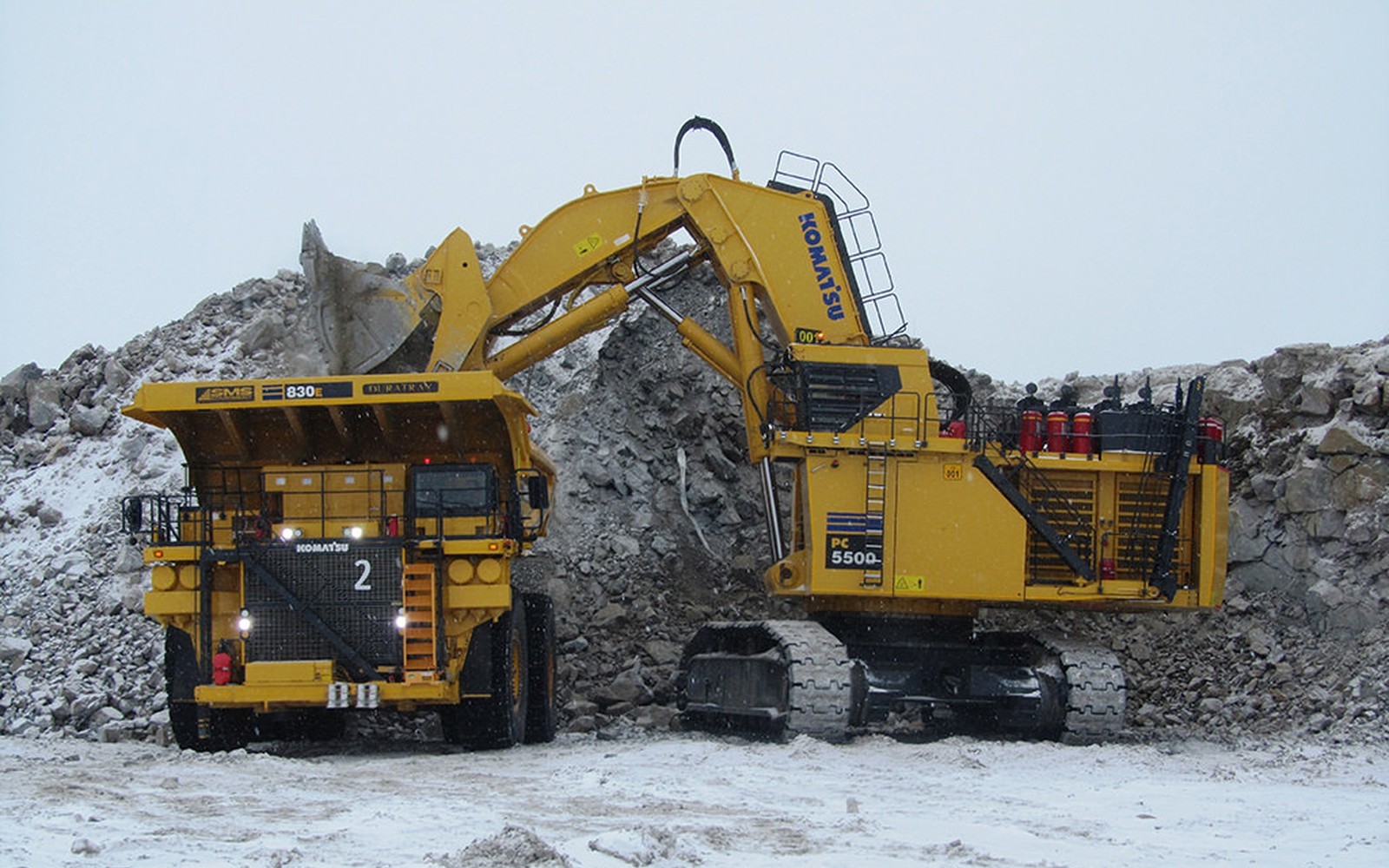
Finance a Komatsu PC4000 hydraulic mining excavator. New and used, B/C credit considered, application-only up to ~$400k, funding in about 1-2 weeks. Request a quote.
Availability is production and production is revenue. The Komatsu PC4000 is a machine that earns on that math every shift. At roughly 390 metric tonnes operating weight, the PC4000 sits in a class that matches well with 150-tonne to 190-tonne haul trucks, loading them in two to three passes and keeping a fleet moving without creating a bottleneck at the face. It is one of the most widely deployed large hydraulic excavators in open-pit copper, gold, and coal operations globally, which means the market for used units exists, the parts network is deep, and the lenders we work with understand the asset.
We finance Komatsu PC4000 excavators across purchase types and credit profiles. New units, used machines from private sellers, dealer stock, and auction purchases are all eligible. Our minimum deal size is $50,000, though PC4000 transactions are routinely well above that. Application-only approval is available up to approximately $400,000. Larger deals, which covers most PC4000 purchases, move through a documentation process that adds bank statements and, when needed, basic financial statements. The typical timeline from completed application to funded deal is one to two weeks. For context on the full Komatsu heavy line, see ourKomatsu financing page. For the broader equipment class, ourhydraulic mining excavator financingpage covers comparable machines across all major brands.
PC4000 Specifications and Field Reality
The Komatsu PC4000-11 is powered by two Komatsu SAA12V140E-7 diesel engines producing a combined output of approximately 3,880 horsepower. Operating weight in standard configuration is approximately 387 metric tonnes. Bucket capacity in face shovel configuration is typically 22 to 24 cubic metres depending on material density and bucket selection, and backhoe configuration is available for applications where the machine works below grade or at pit bottom.
Face shovel configuration dominates in large copper and gold open-pit operations because the machine works against a blasted bench face and delivers material directly into the truck body from above, reducing cycle time. Backhoe configuration appears more often in coal operations and in situations where the bench geometry or material conditions favor a pull-toward-machine dig motion. The configuration choice is made at time of purchase and is a factor in collateral valuation, though both types are fully eligible for financing.
The PC4000 carries Komatsu's KOMTRAX Plus telematics as standard equipment, logging fuel burn, component temperatures, hydraulic system pressures, and fault codes in real time. For used units, KOMTRAX data history, where available, provides a verifiable operating record that supplements physical service documentation. Mines that have maintained their KOMTRAX accounts find that data genuinely useful in the financing process because it reduces the ambiguity that lenders otherwise have to resolve through appraisal alone.
The critical wear items on a PC4000 in surface mining service are the bucket and front attachment components, the upper structure swing bearing, the main control valves, and the hydraulic pump set. Major component rebuilds, when properly planned and documented, extend the viable operating life of a PC4000 well beyond initial expectations. A machine that has had a first major rebuild and maintained good records is often more attractive to lenders than an equivalent-hour machine with no documentation, because the rebuild resets the component risk clock on the systems most likely to cause unplanned downtime.
Structuring the Finance on a Large Hydraulic Excavator
PC4000 financing terms typically run 36 to 84 months depending on machine age, component condition, and the buyer's financial profile. A newer machine with warranty coverage supports a longer term because the lender's collateral risk is lower relative to the outstanding balance at any point in the repayment schedule. A used machine with a clear rebuild history can support a mid-range term. High-hour machines with incomplete documentation typically draw shorter terms to keep the lender's exposure in line with the machine's realized value.
Monthly payment structure matters in mining where cash flows can move with commodity prices, contract payment schedules, and seasonal operating patterns. We structure terms with the operational cash flow in mind, not just the total amount financed. A payment that fits the operation's billing cycle is a payment that gets made. We can also discuss step-up or step-down payment structures for operations that expect cash flow to grow or where a large rebuild cost is anticipated at a known point in the machine's life.
Lease versus loan is worth thinking through carefully on a machine of this value. Amining equipment leaselowers the monthly obligation and may offer accounting and tax benefits depending on how the lease is classified. A loan builds ownership equity and allows full use of depreciation deductions, including potential Section 179 or bonus depreciation treatment in the year of purchase. We are not tax advisors, but we can show you both structures and the numbers differ enough on a transaction of this size that the comparison is worth running with your accountant before you commit to a structure.
Where the PC4000 Runs and Why That Matters
The PC4000 has a long deployment history in North American copper operations, particularly in Arizona and Nevada, where the copper porphyry deposits that feed major open-pit mines have been operating with hydraulic excavators of this class for decades. The Morenci, Bagdad, and Ray mines in Arizona are representative of the operating environments where a PC4000 fits the production system. In Nevada, the Carlin Trend gold operations and the Nevada Copper projects have used similar equipment in both copper and gold contexts.Globe, AZand the broader Arizona copper belt are areas where we regularly work with operators on large excavator financing.
In coal, the PC4000 appears in Powder River Basin operations aroundGillette, WYwhere the coal overburden stripping and loading cycles benefit from the machine's production rate. PRB coal operations are notable for the sheer volume of material moved per shift, and the PC4000's throughput is sized to the task. The commodity context affects how lenders evaluate an operation's stability, and we are familiar with the dynamics of both copper and coal as underwriting contexts. Ourcopper mining equipment financingandcoal mining equipment financingpages cover the industry-specific considerations in more depth.
Credit and Documentation
We consider B and C credit profiles on mining equipment transactions. A difficult year in a commodity cycle, a prior restructuring, or a balance sheet that is stretched due to a capital expansion are all situations we have seen before and evaluated. The question we are answering is not just what the credit score says, but whether the current operation is stable, the asset is real, and the debt service is supportable given the revenue the machine generates.
For transactions up to approximately $400,000, an application-only approach is often sufficient for an initial approval. The application covers the business, its principals, and the machine being purchased. For larger deals, three months of business bank statements gives us the cash flow picture we need to structure the transaction. Full financial statements, tax returns, and additional documentation may be required for the largest deals or for situations where the operating history is short or the credit profile is complex. We tell you upfront what we need and why, so there are no surprises during underwriting.
For operations that are newer or that are expanding into a new contract situation, ourstartup mining business financingprogram addresses those scenarios specifically, with structuring approaches that account for limited operating history. And if the machine you are buying is a private-party purchase or an auction acquisition, ourprivate-party equipment purchase financingprogram handles the mechanics of those closings, including lien payoffs on existing notes.