
Finance drill rigs, processing equipment, and mobile iron for rare earth element mining operations. Mountain Pass and other domestic producers served.
MP Materials' Mountain Pass mine in California is the only rare earth element mining operation in the United States at commercial scale, and it is operating at a moment when domestic supply chain policy has elevated rare earth production to a national priority. Neodymium, praseodymium, dysprosium, and the other rare earth elements that flow through Mountain Pass go into permanent magnets that power electric motors, wind turbines, and defense systems. The political and economic context for financing rare earth mining equipment right now is unlike any other commodity we work with.
We finance equipment for rare earth mining and processing operations, from the mobile iron that handles ore extraction through the processing infrastructure that separates and concentrates rare earth elements. Drill rigs, excavators, haul trucks, crushing and sorting circuits, and separation plant equipment all qualify. We also work with exploration companies bringing new rare earth deposits toward feasibility. Minimum transaction $50,000. Application-only available up to roughly $400,000 for qualified borrowers.
Mountain Pass and the Emerging Domestic Picture
Mountain Pass in San Bernardino County, California, produced the majority of global rare earth output for several decades starting in the 1960s. After a period of dormancy following environmental permitting challenges, MP Materials restarted operations and has been investing heavily in expanding mine capacity and building domestic processing capability. The site now processes bastnaesite ore through crushing, flotation, and wet chemistry stages to produce a mixed rare earth carbonate and, more recently, separated rare earth oxides.
Beyond Mountain Pass, US Rare Earths is advancing projects in Montana and Idaho. Rare Element Resources has deposits in Wyoming and Colorado. Ucore Rare Metals has been working toward domestic heavy rare earth processing. These development-stage projects require exploration and pre-production equipment capital at a stage where conventional bank lending is not readily available.
The rare earth supply chain story intersects with defense and technology policy in ways that have attracted government-backed financing vehicles including Department of Defense investment authority and Department of Energy loan programs. Private equipment financing sits alongside those programs -- the government programs often cover large project-level capital while equipment financing addresses the specific asset-level needs on a faster timeline and with less bureaucratic overhead.
Equipment Categories in Rare Earth Operations
Rare earth operations span a range from open-pit mining to complex chemical processing, and the equipment requirements follow accordingly.
Mining and primary processing-- Open-pit rare earth mines use conventional hard-rock mining equipment: drill rigs for blasting patterns, excavators or shovels for loading, haul trucks for ore movement.Hydraulic excavatorsin the 50- to 200-ton operating weight range are typical for operations of Mountain Pass's scale.Surface drill rigshandle the blast hole drilling that precedes each production blast cycle.
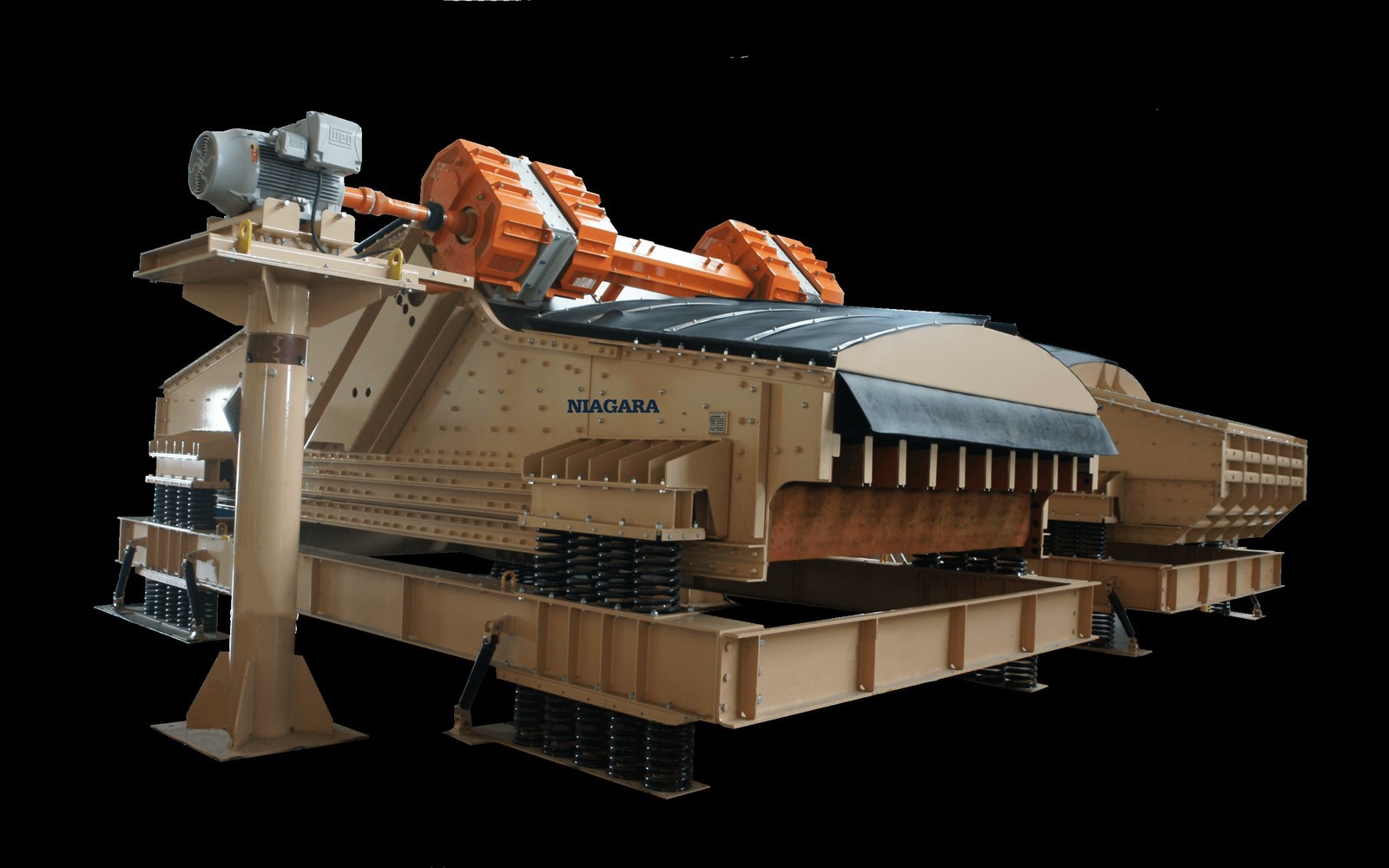
Crushing and separation-- Primary and secondary crushing reduce the run-of-mine ore ahead of flotation.Portable or semi-portable crushing plantsare sometimes used at development-stage projects or for satellite ore bodies feeding a central processing facility. Flotation circuits and the associated reagent handling, thickening, and filtration steps are fixed-plant equipment with long service lives.
Exploration equipment-- Advancing a new rare earth deposit from known resource to permitted mine requires significant drilling.Core drilling rigsextract the oriented core samples that geologists use to define the ore body in three dimensions. A drill rig capable of 300 to 1,500 meter diamond core holes is the primary capital item for an exploration program.
The Financing Path for Rare Earth Operations
Rare earth financing follows the same basic structure as other mining equipment financing, with one important nuance: many rare earth projects are development-stage companies with equity funding but limited production history. That context shapes the underwriting conversation.
For development-stage companies buying equipment against a fully funded exploration or pre-production program, we look at the company's capitalization, the equipment's intrinsic value as collateral, and the credibility of the development plan. A core drill rig, for example, has value independent of whether it finds commercial-grade ore -- it can be sold to other drillers or relocated to a different project. That portability and market depth supports the collateral case.
Producing operations like Mountain Pass's expanding fleet purchases move through more standard underwriting. For the mining fleet additions,mining equipment loansormining equipment leasingstructures both work depending on the company's balance sheet and tax planning preferences. For processing plant expansions, project-level conversations about the capital structure make sense before committing to a financing structure.
TheSection 179 deductionapplies to eligible equipment purchases and can accelerate the tax benefit of a purchase in the year the equipment is placed in service, which matters meaningfully for profitable producing operations.